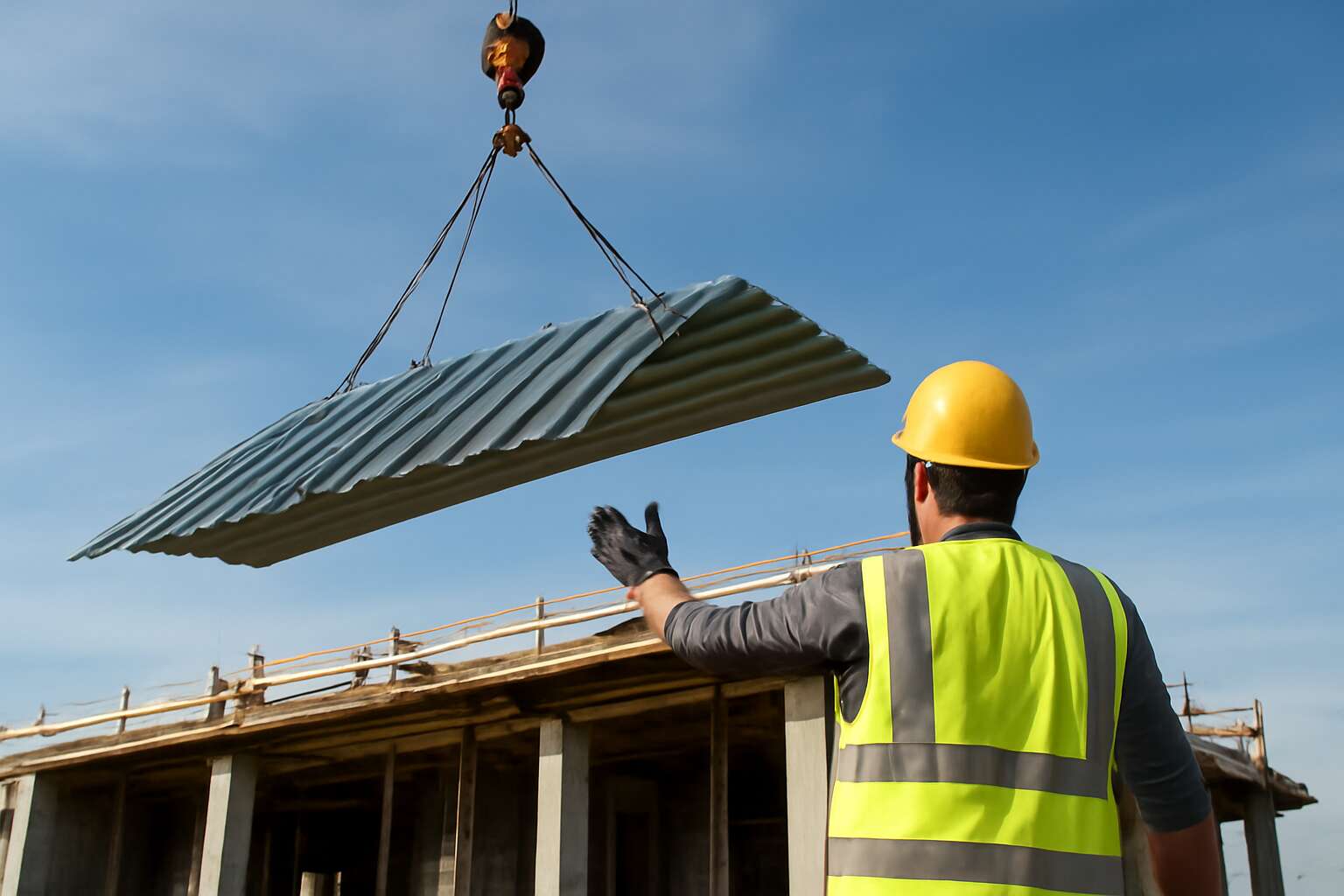
Roof Sheet Handling: Safety, Equipment, and Best Practices
Safety and Compliance
A firm grip on safety turns roof sheet lifting from a gamble into a choreography of care. Rigorous handling reduces injuries by up to 70%, a figure that carries weight in South Africa’s work sites. When the wind mutters, the plan must stay steady—PPE, weather checks, and crisp signals, never improvisation.
Equipment chosen with precision becomes an ally. Lifting slings, beam clamps, and harnesses translate caution into action. Consider these essentials:
- Inspect lifting gear before every use
- Secure loads with compliant slings and restraints
- Maintain clear communication and exclusion zones on site
Compliance is the quiet anchor—risk assessments, trained operators, marked edges, and regular audits. In roof sheet lifting, training and permits keep the darkness at bay as the crane voices its call.
- Carry out a site-specific risk assessment
- Verify equipment ratings and certification
- Monitor wind and weather conditions before lifting
Equipment and Tools for Roof Panel Hoisting
On South Africa’s bustling rooftops, the right gear can turn a risky lift into a smooth sequence. In roof sheet lifting, choosing purpose-built equipment translates weight into control and pace. A seasoned foreman puts it plainly: tools are the quiet multipliers of effort, keeping panels aligned as wind shifts and glare bites the steel!
Key equipment that makes the process smoother includes:
- Lifting slings rated for the load and lift angles
- Beam clamps, trolleys, and rails for steady tracking
- Harnesses and fall-protection gear for secure positioning
Regular checks and simple maintenance keep gear ready and crews confident, turning each hoist into a controlled, repeatable movement rather than a guess.
Techniques for Safe Roof Panel Hoisting
On South Africa’s rooftops, one gust can turn a routine lift into a headline! roof sheet lifting is as much about temperament as torque—weight, wind, and glare must move in a single, predictable rhythm. The aim is a quiet, controlled ascent where panels stay aligned even as sunlight bites at the steel.
That’s why roof sheet lifting thrives on planning, clear communication, and a steady tempo. We watch the weather, coordinate signals, and insist on calm decision‑making—turning each hoist into a repeatable movement rather than a roll of the dice. The practice respects the environment—from wind shifts to glare—while keeping crews safe and productive.
An experienced crew treats gear as a backstage partner: it is checked, maintained, and kept ready, but it is people who give the lift its pace and precision. In this balance between prudence and performance, South Africa’s rooftops stay grounded and efficient.
Planning and Risk Management for Roof Handling
On South Africa’s rooftops, a calm lift is a rare punctuation; wind gusts can redraw the plan in seconds! In urban projects, roughly a third of roof handling incidents are wind-related, a stark reminder that rhythm matters more than raw force.
Planning and risk management are not dry checklists but a living discipline. Before any move, site mapping is performed, visibility signals confirmed, and go/no-go criteria set. A short, honest pre-brief keeps fear at bay and focus intact.
- Weather and wind profile checks before lifting
- Clear signaling protocol and go/no-go decisions
- Pre-lift gear inspection and edge protection
This is human work: the crew, not the crane, sets the tempo. When minds align, the sheet travels as one, edges preserved, glare managed, shadows avoided. roof sheet lifting becomes a test of temperament as much as torque, a quiet assertion that preparation protects people and steel alike.


0 Comments