Key Roofing Materials for Local Conditions
Galvanized Iron (GI) Sheets
Walk through any Pakistani industrial estate and you will notice the unmistakable gleam of galvanized iron. GI sheets have quietly become the default choice for factories, warehouses, and budget conscious homes. The reason is straightforward. Zinc coating protects the steel core from humidity, which is critical in Karachi’s coastal air and Punjab’s monsoon rains.
These sheets offer practical benefits:
– They reflect solar heat, reducing indoor temperatures
– They are light enough for simple timber trusses
– They resist corrosion for decades when properly installed
What makes GI sheets particularly appealing is their cost per square foot. They allow builders to cover large areas without exhausting project budgets. This is why the roof sheets used in pakistan vary so widely, but GI remains the most visible option across the country.
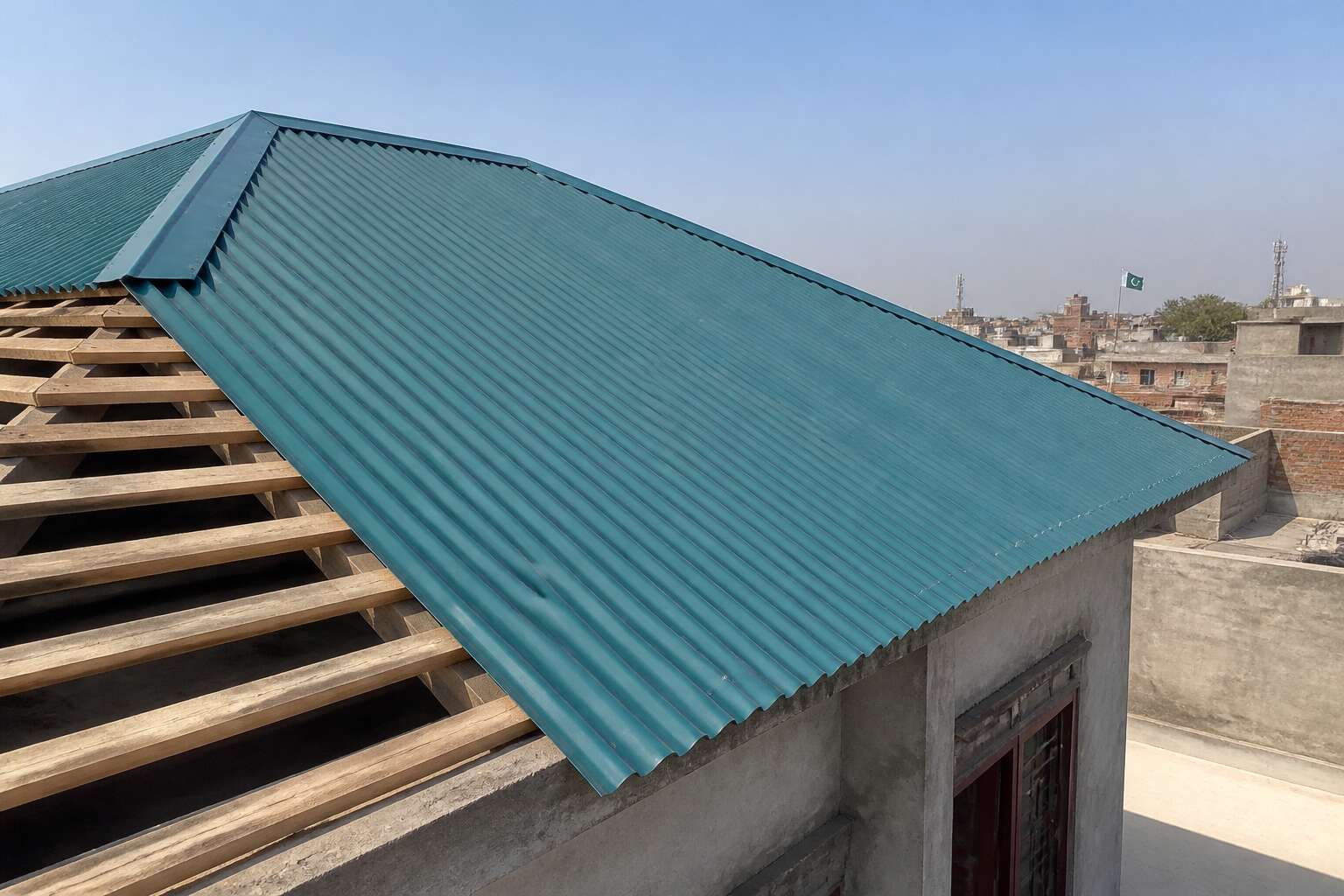
Corrugated Metal Panels
Corrugated metal panels have a distinctive wavy profile that proves form and function can still get along. That ridged shape adds structural stiffness, allowing builders to span longer distances with fewer supports. The color coated variants now available have shifted the roof sheets used in pakistan trade, offering more than just bare zinc.
These panels cope with temperature swings well. They expand and contract without buckling, unlike some flat alternatives. Installers appreciate the simplicity. A drill, self tapping screws, and a steady ladder handle most of the job.
Their survival in the market comes down to practical details:
- The ridges channel rainwater cleanly toward the gutters.
- The profile works on steep residential slopes and low angle industrial sheds.
- Minor dents or scratches hide in the corrugations without ruining the facade.
Ask any supplier about roof sheets used in pakistan, and corrugated panels come up within minutes. They are familiar and dependable.
Polycarbonate Roofing
A single polycarbonate panel weighs a fraction of its metal counterpart. Contractors on large projects save on structural steel because the roof system is lighter. The material transmits up to 90 percent of available light while filtering out the harshest UV radiation. For factories and workshops in Pakistan, this translates into noticeable electricity savings during daylight hours.
Installation is straightforward. Panels cut with a circular saw and fasten with thermal expansion washers that accommodate movement. Unlike steel, polycarbonate does not corrode in coastal areas or react with industrial fumes. It is the quiet option among roofing systems, useful where noise reduction matters.
- Skylights and roof lanterns
- Carports, pergolas, and verandas
- Agricultural sheds and poultry houses
When buyers specify roof sheets used in pakistan for projects that need daylight and durability, polycarbonate occupies a unique position.
Fiber Cement Boards
Fiber cement boards present a calculated choice for roof sheets used in Pakistan, especially where humidity and salt air are constant threats. These panels mix cellulose fibers with Portland cement to form a rigid, dense sheet. Unlike metal alternatives, they do not corrode or conduct heat aggressively.
The material’s mass works in its favor. It absorbs noise from rain and blocks some solar radiation, reducing heat buildup inside a structure. I have seen this material specified time and again in Pakistan’s southern coastal belt, where stability matters more than flashy looks. A surface sealer prevents capillary absorption along the board edges and preserves the panel over decades.
Several formats exist for different roof geometries:
1. Flat panels for low slope decks
2. Corrugated profiles for water runoff
3. Pre-painted finishes for aesthetic consistency
Clay and Concrete Tiles
Clay and concrete tiles carry a physical gravity that metal and fiber simply avoid. Their mass delays heat transfer, which matters in Pakistan’s interior plains where afternoon sun pushes interior temperatures past comfort. A clay tile roof absorbs that heat slowly, then releases it after dark. Concrete tiles offer similar behavior, though their alkaline composition requires careful handling of runoff.
When evaluating roof sheets used in Pakistan, these tiles appear less often than corrugated metal, but their lifespan justifies the structural cost. The firing process makes clay brittle under point loads, so foot traffic during installation demands discipline. Concrete tolerates impact better but weighs more per square meter, forcing engineers to revisit truss designs.
Both materials need a ventilated air gap beneath the tiles. Without it, trapped moisture erodes the battens from underneath, and the roof fails from the inside out.
Factors That Influence Roof Sheet Selection
Climate Resilience and Heat Reflection
When evaluating roof sheets used in Pakistan, the environment dictates every decision. The sun beats down with startling intensity across the plains, so heat reflection becomes a survival issue, not just a comfort feature. I have seen warehouses where the wrong sheet turns interiors into furnaces. Yet the monsoon season brings a different adversary. Heavy rainfall and humidity demand a product that resists corrosion and thermal expansion.
Consider the physical stressors at play:
- Extreme UV exposure degrades weaker materials
- Rapid temperature drops after sunset cause contraction
- Dust storms abrade protective coatings
Each factor alters the long term performance of the sheet. A roof must balance reflectivity with structural integrity. The best roof sheets used in Pakistan achieve this through specialized pigments and layered compositions that shrug off heat while remaining flexible enough to endure daily thermal cycling.
Durability and Corrosion Resistance
Durability hinges on the metallurgy beneath the paint. A sheet with a thin zinc coating fails first where fasteners pierce the surface. Salt-laden air in coastal regions accelerates galvanic corrosion, eating unprotected edges quickly. The gauge thickness matters equally. Heavier steel resists hail impact and rough handling during installation. Lighter sheets spare the budget initially but demand replacement sooner.
When evaluating roof sheets used in Pakistan, I tell clients to scrutinize the coating weight and base metal quality. The resilient options share specific traits:
- Zinc coatings exceeding 180 grams per square meter
- Prepainted finishes with corrosion-inhibiting primers
- Steel substrates meeting international standards
These details separate decades of service from premature failure. Many builders select roof sheets used in Pakistan based purely on price, only to discover that corrosion has no respect for budgets. Sheeting that cuts corners reveals its weakness within two monsoon cycles. The damage creeps silently beneath the paint film, then spreads outward until the panel buckles.
Aesthetic Appeal and Architectural Look
When I stand back and look at a completed house, the roof becomes part of the story. The visual weight of a structure shifts with its covering. In many regions, roof sheets used in Pakistan are chosen for how they echo traditional clay tiles while offering modern resilience. The profile lines, whether wide and sweeping or tight and sharply corrugated, change the entire silhouette.
Color plays an equally strong role. Some buyers prefer earthy tones that blend with the landscape, while others want bold prepainted colors that announce the home from a distance. The architectural style matters too. A contemporary flat roof demands a different finish than a steep sloped heritage home.
- Profile depth creates shadow lines
- Colorfastness preserves the finish
- Panel width changes the ridge spacing
Weight and Structural Support
When a roof feels too heavy, the whole house knows it. The structural skeleton must answer every kilogram laid upon it. In Pakistan, builders often choose roof sheets used in Pakistan based on how much load the walls and trusses can honestly carry. A lighter corrugated panel eases the burden on steel frames, while a heavier profile demands thicker purlins and closer spacing.
Consider the wind as well. Uplift forces pull at the sheeting, and fasteners alone cannot save a poorly supported roof. The span between supports determines whether the sheet flexes or stays calm under pressure.
Here are the factors that weigh on the decision:
- Sheet gauge and thickness
- Purlin spacing and truss spacing
- Local wind zone and uplift ratings
- Compatibility with the existing roof frame
Comparing Popular Roof Sheet Types
GI Sheets vs. Corrugated Metal
Choosing between GI sheets and corrugated metal for roof sheets used in Pakistan often feels like a quiet negotiation. The zinc coating on GI offers a shield against oxidation, while corrugated metal relies on its ridges for rigidity. South African buyers tracking these imports notice a real divergence in wear patterns. Corrugated panels dent easily under heavy hail, but GI handles humid coastal air with more composure.
Here is what separates them in practice:
– GI sheets demand fewer replacements near saltwater
– Corrugated metal costs less per square metre
– GI resists corrosion, yet needs proper fastener seals
– Corrugated panels suit steep slopes where drainage is fast
For a shed in Karachi, GI usually wins. In the Karakoram foothills, corrugated proves lighter to haul. The honest answer depends on your specific weather, not on abstract specifications. Every roof tells on its owner after a decade, revealing whether they valued upfront price or long term silence.
Polycarbonate vs. Fiber Cement
In the half-light of a warehouse, the gulf between polycarbonate and fiber cement becomes visible. Polycarbonate lets a pale glow filter through its surface, yet this same membrane turns cloudy under UV exposure. The cheaper roof sheets used in Pakistan often yellow within two monsoons. Fiber cement stands indifferent to sun and fire. It is heavier, and a frame built for light loads will groan.
I have checked both during storms. Polycarbonate rattles. Fiber cement swallows sound. Neither wins outright. Each simply reveals its weakness:
- Polycarbonate yields to heat and light.
- Fiber cement yields to moisture that seeps past unsealed joints.
The honest question is whether your roof will be undone by the sun or by the rain.
Weatherproofing Performance
The monsoon does not negotiate. It finds the one loose seam, the single rusted screw, and it turns a roof into a slow leak. Comparing popular roof sheet types in weatherproofing performance comes down to how each material fails under real pressure. Metal sheets shed water fast, but every fastener is a potential leak. Concrete tiles stand firm against hail, yet their porous edges absorb moisture. The roof sheets used in Pakistan must endure both the harsh sun and the soaking season. Watch for these failure points:
- Seams that lift when wind gets underneath.
- Edges where capillary action pulls water upward.
- Fasteners that corrode and open small leaks.
Each sheet type reveals its weakness eventually. The question is whether you can see the failure before it reaches your walls.
Lifespan and Maintenance Needs
A roof has a finite life. The hallmark of a wise purchase is knowing what that life costs in upkeep. Among roof sheets used in Pakistan, lifespans run from roughly ten years for thin polycarbonate to fifty or more for well-set concrete tiles. Galvanized iron sits in the middle, offering about fifteen years before corrosion takes hold.
- Steel sheets need re-painting every five to seven years.
- Fiber cement boards demand edge sealing before monsoon.
- Concrete tile ridges require re-pointing as mortar crumbles.
The maintenance ritual never vanishes; it changes form. Metal rusts at the screw holes. Cement grows moss at the edges. Plastic grows brittle under the sun. The true expense of a roof surfaces in the decade of care, not the day of installation.
Ease of Installation
Comparing popular roof sheets used in Pakistan, installation ease varies more than most buyers expect. Corrugated metal and galvanized iron sheets go up quickly with a drill and a few clamps. Polycarbonate demands a gentler touch; overtightened screws cause stress cracks. Fiber cement boards are heavy and brittle, so they need two people and a steady platform. Clay and concrete tiles take the longest, as each piece must sit level on the battens.
The typical obstacles on a job site:
– Uneven roof purlins that force extra shimming
– Sheets cut too short at the ridge line
– Fasteners placed too close to the edge, splitting the material
Labour time is the hidden cost. In South Africa, where roofers charge per square metre, a slow installation drains your budget. Pick a system your local contractor has handled before. Trust me, the weight of a fiber cement board changes your whole afternoon.
Cost-Effectiveness per Square Foot
A square metre of roofing can cost twice as much depending on which sheet you carry up the ladder. For roof sheets used in Pakistan, the price per square foot swings widely based on weight, transport, and waste. A steel sheet seems cheap until you pay freight on a heavy bundle. A premium panel looks dear until you count fewer broken pieces on site.
The real figures break down like this:
- Rate per sheet, quoted in rupees or rand
- Delivery cost per square metre
- Offcuts and damaged goods you absorb
Polycarbonate sits at the high end per square foot, yet its light mass cuts freight and handling. Fiber cement tempts buyers with a low sticker price, but one dropped board erases that saving. In Pakistan, local mills have squeezed galvanized iron prices to a thin margin, while imported options carry duties that alter the comparison. The calculator decides, not the display model.
Installation and Aftercare Best Practices
Pre-Installation Checks and Measurements
Before a single sheet is raised, the roof frame demands attention. The purlins, the rafters, and the angles must be examined with suspicion born of experience. In Pakistan, the sun and monsoon show no mercy. A misstep here becomes a costly regret.
Take measurements with a steel tape. Verify the slope against the design drawings. Check for deviation from square, since a few millimeters will multiply across a span. Inspect the substructure for corrosion or loose fasteners. Never proceed on trust alone!
- Confirm the gauge of supporting members matches the sheet profile
- Ensure all fixing points align with the sheet’s rib pattern
- Test for level across each bay using a spirit level
These steps are tedious, yet they protect a roof meant to endure decades of weather. For every type of roof sheets used in Pakistan, from GI to fiber cement, the honest measurement is the first defense.
Proper Fastening and Sealing Techniques
Fastening roof sheets used in Pakistan demands a steady hand and a skeptical eye. The right screws, with the correct washers, separate a dry warehouse from a soggy one. Overdriving a fastener crushes the rubber seal. Underdriving it leaves a gap for water to wander in. Either way, you lose.
Place each screw in the flat of the corrugation, never the crest. That is where the seal does its duty. Lap joints need a bead of mastic, not just a prayer.
Check the seal every six months. Re-torque loose fixings. Replace damaged washers promptly.
Ventilation and Insulation Considerations
Without ventilation, a roof sheet used in Pakistan can turn the space below into an oven. Stagnant air traps heat during the day and moisture at night. Condensation then bleeds into insulation, rusting fasteners and breeding mildew. The fix involves airflow and a thermal break.
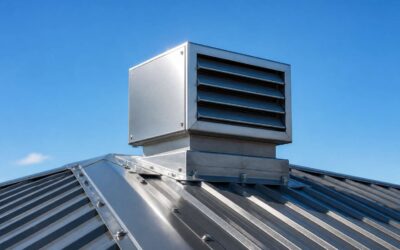
- Ridge vents allow hot, humid air to escape before it settles.
- A 25 mm air gap between the sheet and insulation disrupts heat transfer.
- Reflective foil or a vapour barrier on the warm side stops moisture from migrating.
Aftercare follows a simple rhythm. Clear leaves and grit from the valleys every quarter. Inspect insulation for damp patches after heavy rain, especially around laps and flashings. Replace any crushed or soggy batts without hesitation. A roof sheet used in Pakistan offers decades of service when the air beneath it stays dry and open.
Routine Cleaning and Corrosion Prevention
A rooftop in Lahore or Karachi endures heat and downpour. A film of dust and minerals traps moisture. Rust rarely starts from rain. It starts from this damp grime. Roof sheets used in Pakistan ask for a simple cleaning rhythm, and I have seen it keep corrosion away for decades.
Sweep the valleys monthly, or after heavy storms. Wash the surface with a soft brush and mild detergent. Rinse with a garden hose, not a pressure washer, which forces water under laps. Let the sheet air dry; wiping scratches the protective coating!
Corrosion takes hold at cut edges and drill holes. Inspect those spots yearly. Sand away red dust, apply a rust converter, and finish with matching paint. Check fasteners for looseness and cracked washers. Roof sheets used in Pakistan receiving this attention will outlast their warranty by decades.
Cost Considerations and Budget Planning
Material Costs Across Different Options
In Pakistan, the visible price of a roofing sheet rarely matches its lifetime cost. A polycarbonate panel with a low purchase price may need replacement twice as fast as a fiber cement board, so your budget must account for future purchases.
Material costs vary widely. Galvanized iron sheets respond to global steel tariffs. Clay tiles require stronger structural support, increasing labor expenses. When planning a roof, three considerations dominate:
- cost per square foot at current market rates
- delivery and handling charges for heavy materials
- expected maintenance over a decade
These factors interact, and the roof sheets used in pakistan reflect a market where budget planning demands careful arithmetic.
Labor Costs and Installation Charges
Labor often consumes a fifth of your entire roofing budget, and in Pakistan that figure holds true for most projects. The choice between a bare metal profile and a textured composite panel changes installation time by hours, not minutes. Skilled crews in major cities charge premium rates, yet they also reduce offcut waste. When roof sheets used in Pakistan are fixed by seasoned hands, the sheeting aligns faster and the fasteners seat properly, which prevents costly callbacks. Several factors push charges upward:
- roof pitch and accessibility
- height of the building and scaffolding needs
- edge trimming and flashing details
A low quote often hides extra transport fees or a rushed crew. Budget planning should include a buffer of at least 10% for unexpected cuts and precise fitting. Ask for a line item that separates labor from materials so you see exactly where your rupees go.
Long-Term Savings and Energy Efficiency
When budgeting for roof sheets used in Pakistan, the initial price tag only tells half the story. Long-term savings depend on energy efficiency. A properly selected profile can cut cooling costs by reflecting solar radiation instead of absorbing it. Thermal transmittance values, insulation layers, and surface coatings determine whether a building stays habitable through a June heatwave without torching your electricity bill.
The real math happens over the building’s lifetime. A modest premium upfront for better gauges and thermal barriers offsets years of operational expenses. Cheaper alternatives promise low acquisition costs but deliver poor thermal performance. You end up spending more on air conditioning, maintenance, and premature replacement.
Consider these factors when evaluating long-term value:
- Reflective coatings and their solar reflectance index
- Insulation compatibility with your chosen profile
- Expected service life versus replacement cycles
Shoppers in South Africa face the same dilemma. The cheapest option rarely proves the most economical one. Smart procurement weighs performance against total cost of ownership.
Financing and Availability in Pakistani Markets
Budgeting for roof sheets used in Pakistan demands attention to market rhythms. Karachi and Lahore wholesale hubs shift pricing monthly based on raw steel import costs and currency fluctuations. Buyers tracking these cycles time purchases to avoid peaks.
Financing remains a practical hurdle. Most Pakistani dealers expect advance payments, though established suppliers offer staggered payment plans for bulk orders. Bank financing exists but typically requires collateral that small builders lack. I have seen contractors pool resources to qualify.
Availability varies by region. Consider these realities:
- Punjab and Sindh have dense supplier networks, while Balochistan and Khyber Pakhtunkhwa require longer lead times.
- Local manufacturing dominates the mid-tier segment, but premium imported profiles depend on port clearance.
Seasonal demand spikes before monsoon and summer construction windows strain stock. Price advantages appear for procurement planned four to six weeks ahead. These logistical gaps shape the cost for anyone comparing roof sheets used in Pakistan.

0 Comments