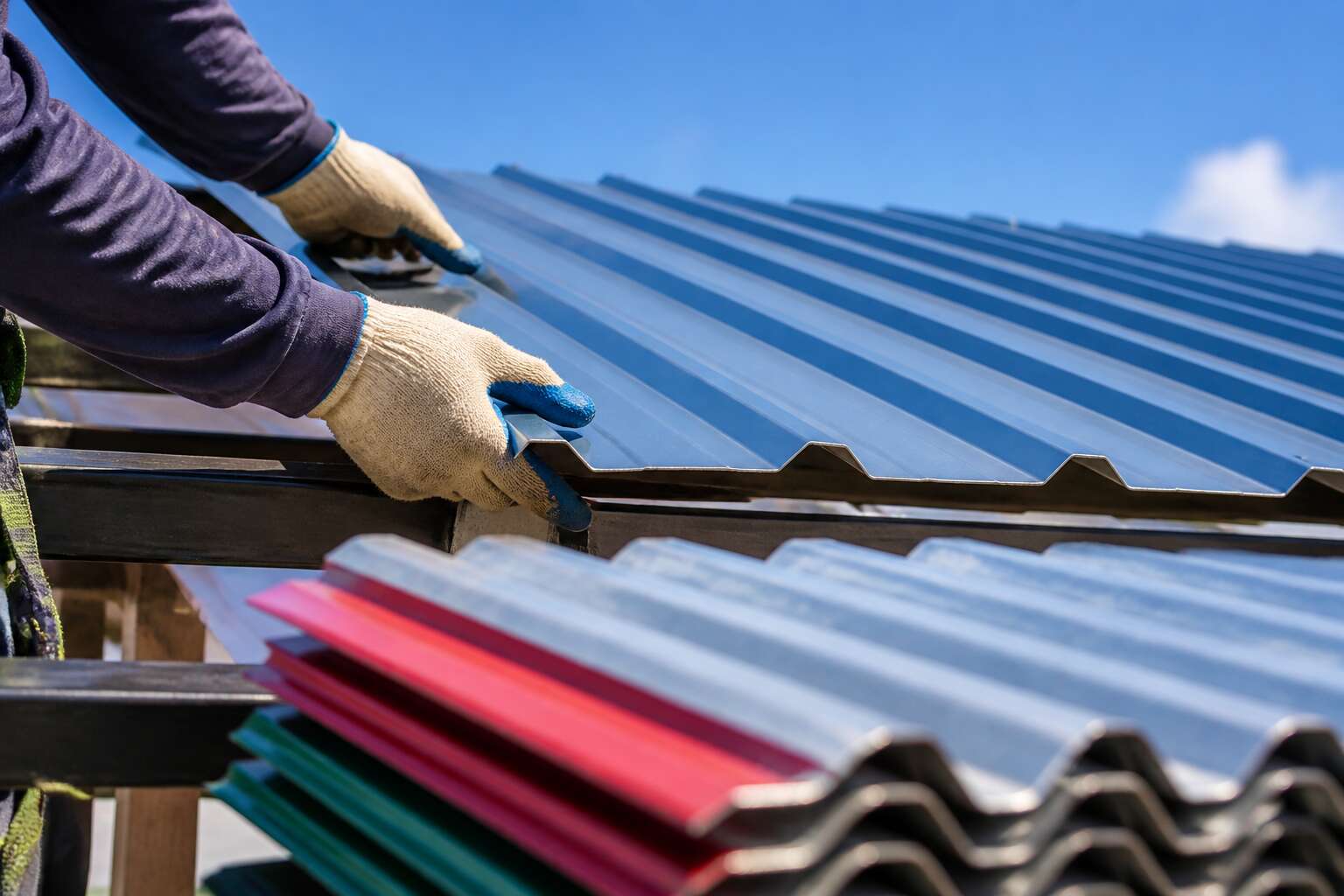
Key Factors That Influence Iron Roofing Sheet Costs
Material Grade and Quality
Between a 0.4mm and 0.6mm sheet, your iron roof sheets price can shift by nearly a third before you even pick a coating. Material grade drives that gap. In South Africa, Chromadek carries a paint system over hot-dip zinc, while Zincalume uses an aluminium-zinc alloy. The corrosion warranties differ sharply, and that difference appears in the base steel.
Quality also depends on zinc coating mass, measured in g/m². A lighter coating may look identical on the roof but erodes quickly in coastal air. That is the hidden cost most quotes ignore!
What actually moves your number:
- Chromadek vs. Zincalume substrate
- Gauge, from 0.4 mm to 0.7 mm
- Imported coil versus local steel
These variables explain the wide spread in iron roof sheets price across South African suppliers.
Sheet Thickness and Gauge
Take two sheets that look identical from the ground, and the price difference will tell you one is a featherweight. Thickness is the most tactile factor in your iron roof sheets price. Hold a 0.4mm sheet beside a 0.6mm sheet, and the difference is plain in the flex of the metal. Heavier gauge costs more because it contains more steel, but it also resists dents during installation and hailstorms later.
Suppliers often quote the thinnest sheet to appear competitive. That quote leaves you with a roof that ripples under foot traffic and fatigues in wind. A modest step up in gauge changes the structural character of the entire roof, which is why experienced contractors rarely touch anything below 0.5mm.
Here is what thickness actually influences:
- The raw weight per square metre
- How much purlin spacing you can get away with
- The service life before corrosion breaches the steel
Check the actual gauge on your quotation, not the marketing description. The iron roof sheets price difference between 0.5mm and 0.6mm is often smaller than the cost of replacing a damaged sheet later. That is the number that matters!
Coating and Corrosion Protection
In coastal South Africa, a 55% aluminium zinc alloy coating can protect a steel roof for over twenty years, while plain zinc gives up in half that time. That difference is why the iron roof sheets price should include corrosion protection, not merely a coloured surface.
The metallic coating does the work. Paint is cosmetic. The protective layer is measured in microns, and every micron of zinc or aluminium adds service life. Cheaper sheets use thinner coatings to look affordable.
I always tell clients to check the coating mass specification, not the brochure. Salt air is relentless.
- Zinc coating mass, grams per square metre
- Aluminium zinc alloy ratio
- Primer and topcoat compatibility
Those three numbers decide how long the roof holds its edge.
Profiles and Aesthetic Finishes
Fluting and profile depth do more than set a roof apart visually. They change how much steel sits in every meter, and that changes the iron roof sheets price. A deep IBR profile carries more material than a flat sheet, so it costs more before paint ever touches it. Shallow profiles use less steel but read as simpler on the roofline.
Finish selection works the same way. Matte polyester reads differently than a textured stone chip coating. The textured option requires an extra manufacturing pass, and that pass shows up in the final iron roof sheets price. I have seen buyers pay more for texture, which is fine, but know it is a line item.
When comparing quotes, look at the full profile specification:
1. Rib depth, which affects load span and material volume.
2. Effective cover width, which changes how many sheets you need.
3. Finish type, from plain polyester to PVDF or textured coatings.
A narrower cover width means more overlaps, more fasteners, and a higher final tally. The roof’s face is what you see, but the profile’s geometry is what you pay for.
Brand Premiums and Certifications
Brand names move the iron roof sheets price by a generous margin. Trusted local manufacturers charge more because they carry audited factories, consistent alloys and warranty claims that actually pay out. Certification works the same way.
A SABS stamp or an Agrément certificate adds cost because someone visited the line, pulled samples and filed paperwork. Imported sheets without these stamps may tempt your budget, but one insurance dispute teaches you why compliance has a premium.
When comparing quotes, look for:
- SABS approved product certification
- ISO 9001 quality management system
- Local supplier warranty terms
I have seen buyers save R3 per meter on uncertified stock, then lose twice that amount in replacement labour. Certifications are not a luxury. They add cost because compliance prevents expensive surprises. So when a higher iron roof sheets price comes with stamps, weigh the trust that certification provides.
Iron Roofing Sheets vs Other Roofing Materials: A Cost Perspective
Comparing Cost per Square Foot with Asphalt Shingles
In Cape Town, a typical asphalt shingle installation runs about R400 per square metre. The iron roof sheets price hovers near R250. That upfront gap tempts many builders. However, the upkeep and lifespan tell a different story. Asphalt shingles lose granules after a few coastal winters. Iron surfaces, when correctly installed, shrug off hail and UV radiation.
Consider what drives the total cost over fifteen years:
- Labour rates for asphalt shingle laying exceed those for iron sheeting, as each shingle needs hand nailing.
- Wooden sheathing under asphalt requires periodic replacement, while iron spans directly over purlins.
- Energy costs shift too, as iron reflects heat more effectively, lowering cooling bills.
On a cost per square foot basis, iron proves cheaper by year five. The persistent price gap is the true reward.
Iron vs Aluminum: Price and Value
Aluminum arrives light, yet its softness shows in dents from small impacts that would barely mark steel. The harder iron surface absorbs impact without deformation. Cape Town’s hail season exposes this difference quickly.
Corrosion creates a sharper distinction. Aluminum self-protects through oxidation; that same chemistry prevents reliable paint adhesion. Iron, when coated well, accepts repaint for decades. The lifespan calculation favours iron.
Owners compare these factors:
- Aluminum resists coastal salt, yet punctures under hail.
- Iron demands stronger framing but lower upkeep over time.
- Aluminum expands roughly twice as much, loosening fasteners.
Over fifteen years, the iron roof sheets price justifies itself through endurance. I have watched builders choose lighter panels and then face the true cost of maintenance. What seems lighter at installation becomes heavier in time!
Iron vs Clay or Concrete Tiles
Clay and concrete tiles carry a heritage premium that feels historically justified until your roof frame groans under the load. Those tiles weigh roughly three times more than a profiled iron sheet, demanding reinforced trusses and extra labour. The iron roof sheets price, by contrast, includes a lighter installation that avoids structural bribery!
- Tile replacement after a single cracked unit involves matching batches.
- Iron panels replace individually without colour matching drama.
Concrete tiles suffer from efflorescence, that chalky residue appearing after rain. Clay handles heat well, but it shatters when someone walks across it during maintenance. I have seen tile roofs fail from a dropped spanner. My scepticism of premium materials grows each time I calculate the real cost per square metre over twenty years. That price becomes a bargain when you count skipped repairs and the lack of roof-tile matching tantrums.
Long-Term Savings from Durability
Steel roofing earns its keep over decades, not just at the till point. The true iron roof sheets price reveals itself when you add up what you never pay later: replacement labour, pest damage, and storm repairs. A zincalume profiled sheet can easily last 40 years. Some alternative materials start failing before they reach 15.
South African summers punish roofs. UV radiation breaks down bituminous membranes, and hail dents softer metal panels. Steel shrugs off both! I have watched homeowners replace two or three roofs while their steel neighbour remains untouched. Each skipped repair becomes a discount on that original iron roof sheets price.
What durability saves you over a roof’s lifetime:
– No annual sealing or coating costs
– Lower insurance premiums from fire resistance
– No rot, insect, or moisture issues
The longer the roof stays intact, the cheaper it gets per year of service. That is the real cost calculation.
Installation Cost Differences
Installation labour can shift the iron roof sheets price more than the sheets themselves. A steel roof goes up in days using a small crew. Overlapping profiles mean fewer fasteners and less cutting. I have watched a tile team spend a week laying concrete units while a metal crew finished an entire roof in two afternoons.
Steel sheets weigh less, so trusses can be spaced further apart. That reduces timber costs and build time. Other materials often require extra bracing, which extends the project.
- Steel roofing installs with basic power tools
- Tile requires careful layout and cutting equipment
- Shingles demand a continuous deck below
Every extra step raises the final amount. When suppliers quote an iron roof sheets price, they cover material alone. Installation depends on the substrate, the slope, and the crew. A straightforward gable with metal sheets remains one of the fastest roofs to finish.
Resale Value Impact
A buyer’s first impression often lands on the roofline before they ever step through the door. In the South African resale market, that impression translates directly into negotiation power. Steel roofing carries a quiet prestige. It signals low maintenance and long service, and appraisers recognise that value. The iron roof sheets price paid during construction becomes a selling point years later.
Other materials do not always age so gracefully. Concrete tiles fade and crack. Shingles lose granules after a few summers. Each defect invites a lower offer.
- Metal reflects heat, lowering cooling costs
- Tile and shingle replacements often appear on inspection reports
- Steel roofs rarely trigger such concerns
That is why the iron roof sheets price is more than a material cost. It is an investment in resale leverage.
Calculating the True Expense of Your Iron Roofing Project
Measuring Roof Area Accurately
Measuring roof area accurately is the first step in calculating the true expense of an iron roofing project. A common error is using floor plans instead of the actual roof surface. I always advise clients to account for pitch, overhangs, and corrugation profiles, since these add square metres that aren’t visible from the ground. Every missed square metre shifts the iron roof sheets price. Break the roof into geometric shapes, calculate each triangle or trapezoid, then apply a 10% waste factor for cuts and overlaps.
For accurate budgeting, consider these points:
- Confirm the effective width of your selected iron sheets, as laps reduce coverage.
- Add the cost of flashings, fasteners, and sealants to your estimate.
- Re-measure if you adjust the roof structure or add vent pipes.
Suppliers quote the iron roof sheets price per square metre, so a precise measurement protects your budget from unexpected shortfalls.
Accounting for Waste and Overlap
The quoted iron roof sheets price never tells the whole story. Overlap and waste quietly inflate the final bill. A standard iron sheet covers less than its full width once side laps overlap. Suppliers calculate prices using this effective coverage, not the raw sheet dimension. Ignore it, and you will under-order!
Waste accumulates from several sources:
- Side and end laps reduce usable area by up to 15%
- Cutoffs around vent pipes and chimneys
- Damaged sheets during installation
Roof pitch increases waste too. Steeper slopes demand more cuts at hips and valleys. Start with a 10% waste factor, then adjust upward for complex geometries. Every wasted sheet adds to your iron roof sheets price, so understanding overlap before buying is the difference between a smooth project and a costly surprise.
Fasteners, Flashings, and Sealing Materials
The iron roof sheets price only opens the conversation. Fasteners, flashings, and sealing materials creep onto the invoice quietly. Screws, washers, and closure strips compound quickly. A single box of roofing screws can dent your wallet more than a weekend at the coast. Flashing around chimneys and valleys needs custom bends, and every bend costs money. Sealant mastic, the material that stops water, is sold by the kilogram and consumed by the litre.
Here is what the fine print conceals:
- EPDM washered screws cost triple plain nails
- Pre-painted flashings carry a premium over galvanized
- Bitumen mastic adds up fast on complex roofs
Focusing only on the iron roof sheets price leaves the budget exposed. The true expense surfaces when every component arrives.
Labor and Contractor Fees
Nobody quotes the iron roof sheets price and walks away with a final number! Labor takes a significant portion of the budget. In South Africa, skilled roofing contractors charge per square meter, and rates vary wildly between provinces. A crew in Gauteng will quote differently than one in the Western Cape.
Contractor fees bundle several line items. Scaffolding hire, crane access for heavy sheets, and rubbish removal all land on the invoice. Some contractors charge a call-out fee just to assess the roof. Others include it in the quote but raise the hourly rate.
What determines the final figure?
- Roof pitch and accessibility
- Number of valleys, hips, and penetrations
- Crew size and daily rate
- Travel distance from the contractor’s base
A straightforward gable roof is cheap. A complex hip roof with dormers doubles the hours. The iron roof sheets price stays the same, but the labor fluctuates with every complication.
Transportation and Delivery Charges
The iron roof sheets price covers the metal sitting on the supplier’s yard. Getting it onto your roof is another transaction entirely. Delivery charges involve freight, handling, and the logistics of navigating a loaded truck to a site that might not be truck-friendly.
Distance and sheet length drive the cost. A long sheet means a long tray, and a long tray means a specialized vehicle. If your road is poor or your gate is narrow, the driver may refuse the approach. Then you pay for a second vehicle or multiple trips.
- Distance from the supplier to your site
- Sheet lengths and stacking constraints
- Offloading equipment like a crane or forklift
- Access restrictions on your road or driveway
Suppliers advertise free delivery above a certain order value. That minimum might exclude VAT or apply only within a fixed radius. I have seen delivery quotes double when the site sits behind a strict security gate. The iron roof sheets price stays constant, but the truck that brings them has its own invoice. Ask for the delivery line item in writing, and do not assume the quote covers offloading!
Permits and Compliance Costs
The path from “quoted price” to “final sign-off” is littered with paperwork. Permit fees are the quiet assassins of budgets. Your shiny new iron roof sheets price is just the initial handshake. The municipality wants its cut, and they are not shy about it.
This is where the romantic idea of a weekend DIY project encounters the reality of a structural engineering report. Any alteration to your roof’s framework, even a subtle change, requires stamped drawings. A plan that the council deems non-compliant means a resubmission fee. You are paying for the privilege of waiting in a queue.
The compliance checklist is ruthless:
– Approval from the local authority (town planning or building control)
– A certificate of compliance for the installation
– Possible heritage or aesthetic restrictions in your suburb
– The mandatory inspection fee when the municipal officer finally visits
Never assume the structural calcs are “standard.” These documents carry professional indemnity. The engineer is signing off on your trusses, not just your taste in metal. In Gauteng, wind load calculations are legally required, and they are a separate line item on your bill. The iron roof sheets price you see advertised never includes the cost of proving the rest of the house won’t collapse.
Regional Pricing Differences and Market Trends
How Geographic Location Affects Rates
In South Africa, the iron roof sheets price shifts noticeably between provinces. Coastal cities like Durban often show higher rates because salt-laden air demands more durable coatings, while Gauteng benefits from shorter transport corridors. A quote in Cape Town can differ by several rands per square metre from one in Bloemfontein.
Market trends matter here too. When the rand weakens, imported steel inputs cost more, and that movement reaches your quote within weeks. Local mills adjust output monthly, so shortages push prices up faster than surplus brings them down.
- Limpopo quotes often carry lower iron roof sheets price figures due to mill proximity.
- Western Cape rates include climate additives that lift the base cost.
Rural buyers sometimes secure better deals through bulk orders, but urban suppliers rarely negotiate on small quantities. Watching your regional index across several months reveals patterns that save real money!
Seasonal Demand and Price Fluctuations
The iron roof sheets price in South Africa rises and falls with the construction calendar. Demand surges each spring when homeowners race to fix leaks before summer storms, and Western Cape buyers create a second peak in late autumn. Suppliers adjust their monthly rates around this cycle, and quotes often jump several rands within a single week.
I have watched the market swing; the quiet months between these peaks hold a buyer’s advantage. Stock piles up, sellers grow eager, and the iron roof sheets price softens by 5 to 9 percent!
A few seasonal signals stand out.
- Late winter demand dips create bargain windows
- Public works tenders absorb stock and distort local pricing
- Year-end closures freeze supplier dispatch schedules
This rhythm explains why quotes for the same specification can differ noticeably from one month to the next.
Impact of Raw Material Supply and Tariffs
The iron roof sheets price does not travel across South Africa as a single figure. The steel that becomes those sheets arrives through specific ports, and when international supply tightens, the inland provinces feel the pinch first. Coastal buyers benefit from shorter freight runs, but their advantage evaporates when tariffs on imported coils raise the base cost for every mill.
Raw material supply moves in unpredictable lurches. A blast furnace outage in China or a shift in export quotas from India sends ripples through local stockists within days. Tariffs add their own distortion:
- Imported galvanized coil carries duties that inland distributors often absorb differently than coastal ones
- Exchange rate swings change landed costs between quote and delivery
- Local mills adjust prices monthly based on global benchmarks
These forces override the seasonal patterns. A buyer in Gauteng might see the iron roof sheets price climb while Cape Town remains flat, purely because of logistics and tariff exposure.
Bulk Pricing and Wholesale Discounts
Across South Africa, regional pricing tells a story of access and competition. Industrial hubs like Johannesburg and Durban host dense networks of steel stockists, which keeps the iron roof sheets price lean. Smaller mining towns and rural districts carry fewer suppliers, so a single distributor can set the local rate without pressure. Buyers in those areas pay for distance and scarcity.
Market trends show buyers shifting toward larger single orders. Wholesale discounts reward that behaviour:
- Orders beyond 50 sheets typically gain a 3% to 5% rebate
- Orders beyond 200 sheets often include negotiated delivery terms
- Standing orders with a stockist offer price protection during monthly mill adjustments
Bulk buying also settles the iron roof sheets price in your favour. If steel benchmarks climb next week, the sheets already paid for arrive at yesterday’s cost. For contractors covering multiple sites, that edge compounds quickly.
Online Suppliers vs Local Dealers
Online suppliers publish iron roof sheets price lists that any buyer can access from anywhere in South Africa. A dealer in a remote town can no longer justify a premium when a buyer can verify the figure online in seconds. Yet the iron roof sheets price from an online supplier includes freight, and that freight often erases the advantage.
Local dealers respond with services that digital transactions cannot match. They allow physical inspection of sheets, same day collection, and advice from someone who knows regional weather patterns. For a homeowner replacing a storm damaged roof, waiting for a courier is not an option. For a developer planning a housing project weeks in advance, the wait is irrelevant.
The right choice depends on urgency:
- Online suppliers suit planned projects with flexible timelines
- Local dealers suit repairs and rushed orders
Regional price gaps narrow as online competition reaches more areas, but they never disappear.
Smart Budgeting Tips for Buying Iron Roofing Sheets
Choosing the Right Specification for Your Needs
Your budget is not a number. It is a sequence of choices that begins long before the supplier sends a quote. When you select a specification, consider how the roof will perform over twenty years, not just on delivery day. The iron roof sheets price reflects immediate cost, but the true expense includes maintenance, rust repairs, and early replacement.
Ask yourself which attributes are non-negotiable for your site. A roof facing salt-laden air demands a different coating than one in a dry inland region. Spending extra on features you do not need inflates the upfront figure without adding value. That is why smart buyers request a detailed breakdown of each specification option, then compare those numbers against their actual exposure and expected property life.
Negotiating with Suppliers for Better Deals
Most South African homeowners accept the first roofing quotation they receive. That is a mistake. Suppliers build negotiation into their pricing, and buyers who skip the conversation hand over money unnecessarily. Smart budgeting starts with the full project cost in view, then narrows to the iron roof sheets price.
I always advise requesting a line item breakdown from every supplier! When you see exactly where each rand goes, you spot inflated delivery fees or padded labour charges. Then you negotiate with facts, not feelings.
- Ask for a cash discount. Many dealers shave 3% or more off the iron roof sheets price for immediate payment.
- Enquire about offcut or overrun stock. Projects finish with unused sheets that suppliers sell at reduced rates.
- Offer flexible delivery dates. Dealers fill empty trucks when schedules allow, and they reward accommodating clients.
Negotiating on the total package rather than a single number protects your budget and keeps the relationship cordial for future orders.
Purchasing During Off-Peak Seasons
South Africa’s roofing market follows the seasons with the same predictability as the rains. When winters arrive between May and August, site activity slows and the iron roof sheets price takes a welcome dip. Dealers with full warehouses would rather negotiate than store stock, so off peak purchasing hands the buyer genuine leverage over the iron roof sheets price.
This is inventory arithmetic. Costs accumulate on every sheet that sits unsold, and discounts unlock when cash flows before spring demand. Smart buyers plan their builds around this calendar. They commit in winter, pay in winter, and collect in winter.
- Fewer competing buyers means more favourable terms.
- Transport slots open up, so delivery fees fall.
- Factory production remains steady, so special profiles stay available.
The result is a budget that behaves itself.
Reusing Leftover Sheets for Accessories
The ordinary roofing job leaves a surprising quantity of offcuts. Most people toss them into a skip, yet those pieces can become ridge caps, flashing, or protective covers for water tanks. Reusing offcuts reduces the need to buy new accessories, which means the iron roof sheets price on your invoice stays closer to your original estimate.
A disciplined approach to offcuts helps. Keep a pile sorted by size and mark each piece with its gauge. For example:
- Use pieces longer than 500 mm for ridge capping.
- Use smaller sections for pipe flashings.
- Store everything under a tarpaulin to maintain flatness.
I once watched a contractor craft a full set of corner trims from offcuts. He trimmed hundreds of rands from his iron roof sheets price, and the final project looked seamless. Offcuts become a raw material for clever builders. That is smart budgeting!
Exploring Clearance or Slightly Imperfect Stock
Clearance stock in South African hardware yards can hold genuine bargains. Suppliers often discount sheets with minor scratches or colour variation from manufacturing. These flaws do not affect waterproofing or structural integrity. A dented corner or faded patch could slash the iron roof sheets price by a meaningful margin.
The trick is knowing which imperfections matter. Cosmetic marks on the top profile are harmless. Damaged edges or bent lock seams are not. Inspect each sheet before buying:
– Check the zinc coating with a magnet where paint chipped
– Confirm the sheet remains flat and square
– Ask about warranty coverage on seconds
Ask the yard manager to show you the returns pile. That is where off-spec batches end up. Some dealers offer a small warranty on seconds, others do not. Always request written confirmation of what the lower iron roof sheets price covers. Patience here can produce substantial savings for a full roof.
Sourcing Multiple Quotes Before Committing
Sourcing multiple quotes before committing is standard practice for experienced buyers. In my experience, a single iron roof sheets price quote tells you little. It is one figure from one supplier. Across South Africa, dealers calculate their numbers from different cost structures, stock positions and overheads. The same profile, gauge and coating can vary by wide margins between neighbouring yards.
Gather at least three written quotations. When you compare them, look beyond the bottom line!
- Confirm each quote specifies the same sheet profile and thickness
- Check what delivery charges sit inside the total
- Note whether the quoted total includes VAT
Each quotation carries detail. One yard prices stock bought months ago, before tariff shifts. Another has freshly imported material at a different rate. Ask about price validity periods, since prices can expire quickly. Suppliers with old stock sometimes offer the best iron roof sheets price, because they need space cleared.

0 Comments