Understanding the IBR Profile
What Is an IBR Panel?
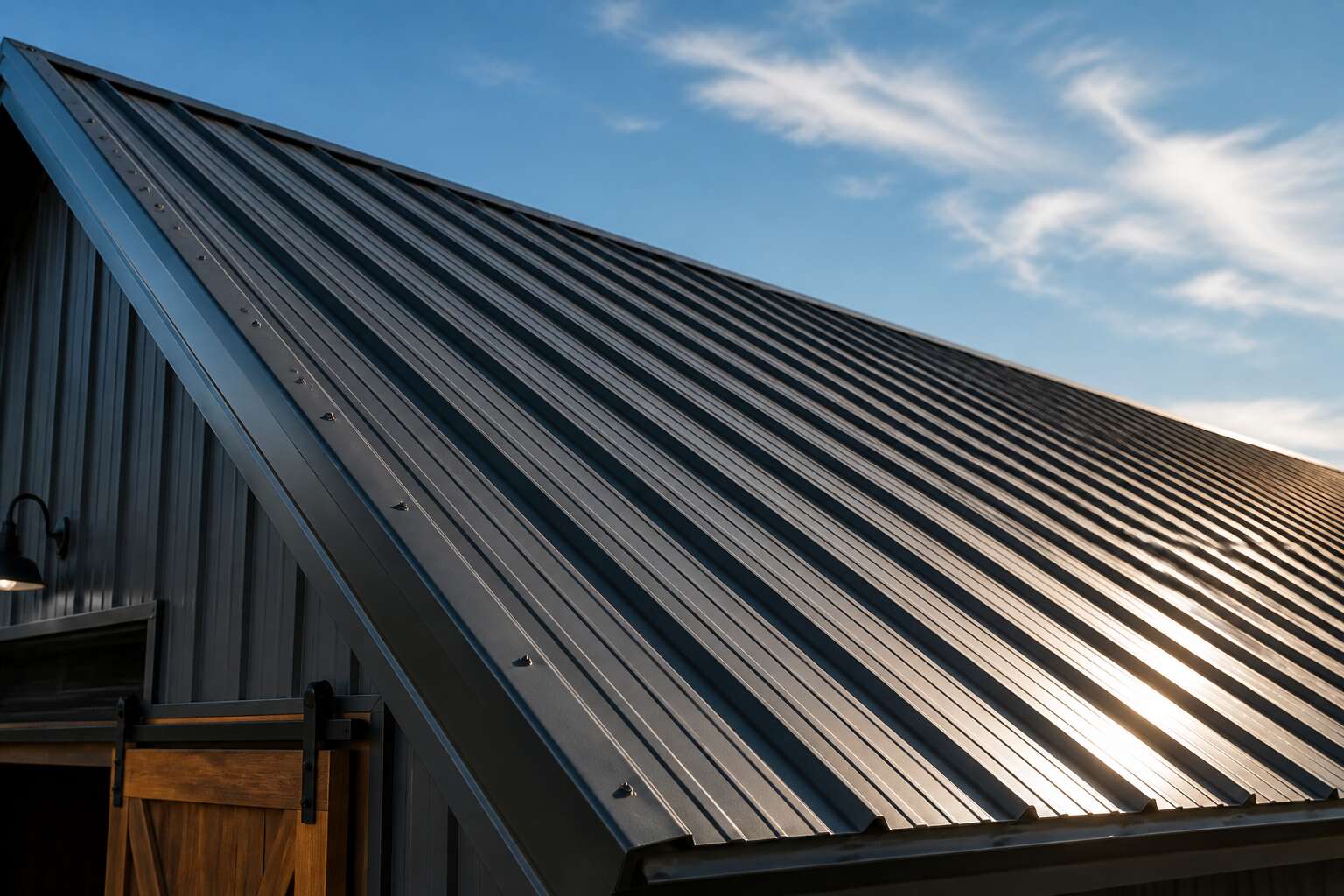
Step onto any working farm in the Highveld and you will see the same silhouette. The IBR profile, short for Inverted Box Rib, is a steel sheet shaped with wide pans and narrow, deep corrugations. It looks simple, but the geometry serves a purpose. The ribs act as stiffeners, allowing panels to span further with fewer purlins underneath.
The shape also governs water flow. IBR roof sheets channel rainwater toward the valleys, a critical trait in regions prone to sudden summer downpours. The overlap design reduces the chance of capillary action pulling moisture upward.
When comparing profiles, consider these features:
- the rib depth directly influences load-bearing capacity
- the wider pan means fewer fasteners per square metre
- the profile accepts both concealed and exposed fixing systems
That is what an IBR panel really is, and why ibr roof sheets remain the default choice for so many structures.
IBR vs. Corrugated Roofing: A Comparison
Most people assume any metal roof performs the same, until a Highveld thunderstorm tests the difference. Traditional corrugated sheeting has a rounded wave. IBR roof sheets use a sharper trapezoidal geometry. That shape changes everything.
The flat pans of an IBR profile sit higher off the structure, so air pressure behaves differently underneath. This matters for wind uplift on long spans. Corrugated flexes more under load, demanding closer purlin spacing. IBR panels stretch further between supports, saving material and labour.
Compare them directly:
- Rib frequency: corrugated has more ribs per metre, IBR has fewer but deeper ones
- Water flow: IBR directs rainfall into defined channels with less turbulence
- Fastener count: IBR’s wider pans reduce screw penetrations
The deeper profile of IBR roof sheets hides fastener heads in shadow lines. Corrugated looks busier, and its shallower waves don’t match that rigidity. I have seen builders switch to IBR and never go back!
Typical Uses in Residential and Commercial Buildings
Walk through any South African industrial park and count the roof profiles. IBR dominates for a reason. In residential work, ibr roof sheets have become the default for roofs that need to span open-plan interiors without extra support columns. The broad pans cut visible fasteners, which matters when you are standing on the pavement looking up at a double-storey home.
Commercial buildings push the same logic further. Warehouses, retail centres, and factory lines all rely on IBR for its long-span capacity. Fewer purlins mean lower steel costs, and the defined channels handle Highveld downpours without ponding. The trapezoidal shape resists oil canning, so the cladding stays visually flat over years of thermal movement. In my experience, builders appreciate that IBR roof sheets can be ordered in custom lengths, cutting waste on site!
Common applications include:
- Large-span warehouse roofs
- Shopping centre canopies
- Residential gable roofs
- Carports and covered walkways
Why IBR Roofing Stands Out
Exceptional Durability Against Extreme Weather
South Africa’s Highveld thunderstorms deliver hailstones the size of golf balls, and coastal gales shear off inferior roofing. IBR roof sheets resist these assaults through their deep trapezoidal profiling. The ribs act as stiffeners, distributing kinetic impact across the sheet instead of concentrating stress at one point. This structural rigidity limits flexing under wind uplift, which is why engineers specify them for warehouses in the Cape’s wind belt.
What impresses me more is the material’s response to thermal stress. IBR roof sheets expand and contract in controlled increments, reducing fatigue at fastener points. My own experience with a corrugated alternative showed cracked washers within three years. IBR holds its seal.
- Hot-dipped galvanised coating
- Tension-resistant fastening zones
- Minimal thermal bridging
These characteristics translate into decades of service, even in extreme weather.
High Strength-to-Weight Ratio
Steel should be heavy. A metal sheet weighing six kilograms per square metre, yet strong enough to support a grown man, is a quiet defiance of expectation. IBR roof sheets achieve this through their trapezoidal folds, which transform a thin gauge of steel into a load-bearing profile. The ribs act as integrated beams, not decorative corrugation.
The practical consequences follow naturally:
- Lighter roof members, reducing the steel needed in the substructure
- Faster handling, as two workers can lift a full bundle
- Lower dead load, which matters when retrofitting older buildings
I have walked across 0.5mm IBR roof sheets on a warehouse in KwaZulu-Natal and felt the profile hold firm. My own workshop spans six metres between supports with this same material, and the frame cost less than a heavier alternative would have demanded. That is the ratio in practice: strength without the penalty of mass.
Quick Installation and Reduced Labor Costs
A roof is only as good as the time it saves you. On site, labour costs often outstrip material prices, so installation speed becomes a quiet financial lever. IBR roof sheets are engineered with wider coverage, meaning each sheet spans more roof area than traditional profiles, reducing the number of units you handle and fix. That single factor trims hours from a project, and hours compound into real savings.
Consider the rhythm of a working day:
- Less cutting, because the 686mm cover width aligns with common modular spacings.
- Fewer overlaps, which means fewer seals and less risk of future leaks.
- Simpler fastening, as the stiff ribs create clear fixing lines that reduce errors.
I have seen crews finish a 500 square metre warehouse in two days using this system. In Gauteng, where labour shortages bite, that speed matters. Instead of planning for extended scaffolding or complex staging, you simply move along the profile and fix. The material handles predictably, allowing a small team to outperform a larger one using heavier, less forgiving options. This is why IBR roof sheets became a staple for both domestic renovations and industrial projects. They cut the cost of installation without cutting corners on the final covering.
Design Flexibility and Finishes
A roof often determines how a building is perceived. IBR roof sheets provide design flexibility that extends beyond structural utility. The profile’s clean lines accept a range of finishes, from matt tones to high gloss, letting architects shape the building’s character without altering its core.
Finish options carry practical weight. The coating resists UV damage while adding visual depth. You can select:
- PVDF finishes for color retention
- Polyester coatings for a balanced sheen
- Textured surfaces to minimize glare
These choices allow IBR roof sheets to sit comfortably against brick, timber, or steel. I have seen a modest home transformed by a charcoal finish, and it was striking! A factory used pale grey to reflect heat. The profile remains consistent, but the material changes the entire mood.
Materials and Coatings Explained
Galvanized Steel vs. Colorbond Options
Choosing between galvanized steel and Colorbond for your ibr roof sheets comes down to budget and climate. Galvanized steel carries a zinc layer that corrodes first, protecting the base metal. This sacrificial action makes it a robust performer in salty coastal air, and it needs little fuss. Colorbond stacks a baked-on paint system over that same zinc, adding a tougher outer shield and far better colour retention through our long summers.
- Galvanized: lower initial cost, eventual grey patina across the surface.
- Colorbond: higher initial cost, superior UV resistance, dozens of finish shades.
Both coatings meaningfully extend the serviceable life of your roof. The right choice hinges on whether you prioritise upfront savings or lifelong appearance.
The Role of Zincalume in Corrosion Protection
Zincalume, an alloy of aluminum, zinc, and silicon, creates a duplex barrier on ibr roof sheets. The aluminum oxide layer blocks moisture and oxygen, while zinc’s sacrificial action protects exposed edges from chloride attack.
- Aluminum oxide offers a physical shield against corrosion.
- Zinc corrodes preferentially, preserving the steel core.
- Silicon ensures adhesion and prevents micro-cracking.
In South Africa’s coastal air, where salt particles abound, this combination is vital. Over time, zinc forms a self-sealing layer of zinc carbonate. On inland properties, the coating resists UV and thermal cycling. For architects, Zincalume balances lifecycle cost with reliable corrosion protection, outperforming plain galvanised steel in harsh environments.
Understanding Paint Systems and Guarantees
Paint systems on ibr roof sheets are not afterthoughts. They determine how long the steel underneath survives.
A standard system uses three layers:
- The primer bonds to the metal.
- The topcoat resists UV radiation.
- The backer handles internal condensation.
Each layer has a job. Manufacturers offer guarantees that reflect real-world performance. In South Africa, the coastal climate reduces warranty periods. A 20-year guarantee inland might drop to 10 years near the ocean. I have learned to read the fine print. Some warranties exclude salt spray damage entirely, which changes the value equation!
Installation Best Practices
Fastener Placement and Spacing Guidelines
The first rule of installing ibr roof sheets is to keep the screw out of the rib crown. The second rule is to read the first rule again! Fasteners belong in the pans, the flat valleys where water sheds. Screwing through the crown crushes the steel, distorts the washer, and hands moisture an entry point to your ceiling.
Spacing follows a simple logic. Fixings should sit at every second pan across the sheet width, with no more than 300 mm between screws along any purlin. At laps, gable ends, and gutter lines, reduce that gap to 200 mm. I have yet to meet a leaky ibr roof sheet that respected these numbers.
- Maximum 300 mm between fasteners along each purlin
- 200 mm at laps, edges, and gutter zones
- One screw per alternate pan across the sheet
- Washers flush but not flattened
A washer that is flattened is a washer that has failed. Tighten until the rubber slightly bulges, then stop. The sheet should never ring under pressure.
Achieving Proper Overlap and Sealing
IBR roof sheets are only as watertight as their weakest lap. The side lap, where two sheets interlock rib against rib, must face away from the prevailing wind. The end lap, where one sheet overlaps the next, demands a minimum 150 mm of overlap, more if the roof pitch falls below five degrees.
Sealing is where installations succeed or fail. Butyl tape, not silicone, belongs inside the lap. Lay it in a continuous bead and let the sheet’s own weight press it into service. When fastening through a lap, each screw must pierce both layers of steel cleanly, leaving no burr to lift the sealant.
Keep these numbers close:
- 150 mm minimum end lap
- One full rib for side lap
- Continuous butyl bead at every end lap
- Clean, burr-free holes through both sheets
Water flows downhill. Your laps should honour that.
Safety Precautions for Roofing Work
Falls from height are the leading cause of workplace deaths in South African construction. Any roofer stepping onto IBR roof sheets must treat the surface as a live edge.
Safety precautions start on the ground. Stack sheets flat and clear of walkways. Lift them without twisting your spine. Use gloves; the cut edges of steel are brutally sharp. On the roof, anchor your lanyard before shifting your weight. Never walk on the flat pans; tread only on the ribs, and only where the framing supports the metal.
A simple protocol keeps the crew accountable:
- Check harnesses and lanyards for wear before each shift.
- Mark every anchor point and fall zone before work begins.
- Keep the roof free of loose tools and offcuts.
The pace of installing IBR roof sheets should never outpace the safety system around it. A sheet laid in haste can cost more than time; it can cost a life.
Essential Maintenance for Longevity
Anyone who calls ibr roof sheets boring has never watched one catch the wind mid-lift. Installation rewards patience and punishes shortcuts. Start at the eave, square the first sheet to the frame, and check every subsequent sheet against that datum line. The profile must sit flat on the purlins; forcing it with fasteners only invites stress fractures.
Maintenance after installation is a twice yearly ritual. After the winter rains, inspect for popped screws and any rub marks where sheets meet flashings. Keep the surface clear of leaf litter and bird droppings, both acidic and persistent. A simple checklist covers the essentials:
- Replace any fastener with a cracked washer
- Clean gutters and valley intersections
- Reapply touch-up paint to any exposed metal
These small acts keep ibr roof sheets performing for the long haul. Neglect turns minor defects into expensive replacements.
Budgeting and Sourcing
Factors That Affect Pricing
The price of ibr roof sheets in South Africa can swing by nearly a third based on where you source them and how you handle logistics. That variance comes down to gauge thickness, order volume, and the distance between the mill and your site, not brand snobbery.
Local suppliers near industrial hubs like Johannesburg or Durban often quote lower per-sheet rates than rural stockists who must factor in freight. That gap narrows with delivery, but it rarely disappears! Buying direct from a distributor changes the calculation, though in my experience only for larger orders. Where you buy your ibr roof sheets affects price per square metre as much as the material itself.
Three factors dominate the final quote:
- Base material and coating grade
- Cut-to-length customisation versus standard stock
- Transport and handling fees
Each factor shifts the quoted figure, which is why two suppliers can price the same sheet differently.
Tips for Selecting a Reliable Supplier
Getting a quote for ibr roof sheets is half the battle. The real test comes when you compare suppliers on more than price alone. A low quote often hides transport surcharges or material downgrades that surface later in the project.
I learned this the hard way on a warehouse job outside Polokwane. The cheapest quote came from a stockist who could not guarantee delivery dates. That delay cost me more than the savings.
When evaluating suppliers, I now check:
- Lead times and stock availability
- Payment terms and deposit structures
- After-sales support for damaged or faulty sheets
- Delivery fleet coverage for your region
A supplier who holds buffer stock of ibr roof sheets can weather supply disruptions. One who orders on demand leaves you exposed to mill backlogs. Ask about their average turnaround. Ask who carries the risk if a truck arrives damaged.
That matters more than a few rand per sheet.
Delivery and Logistics Considerations
Budgeting for ibr roof sheets rarely ends at the material price. The delivery leg often determines whether your project stays on schedule or stalls for days. Transport costs in South Africa vary sharply by region, and a quote that looks lean on paper can balloon once you factor in crane hire or offloading teams.
I have seen site managers underestimate the logistics of getting long sheets to remote locations. Access roads, gate heights, and weather all play a role. When you source from a distant supplier, the delivery window becomes part of your budget.
- Minimum order quantities for free delivery
- Lead times from mill to depot to site
- Offloading requirements at your location
A supplier with local stock of ibr roof sheets can cut both cost and risk. The cheapest quote means nothing if the truck arrives a week late or with bent edges.


0 Comments