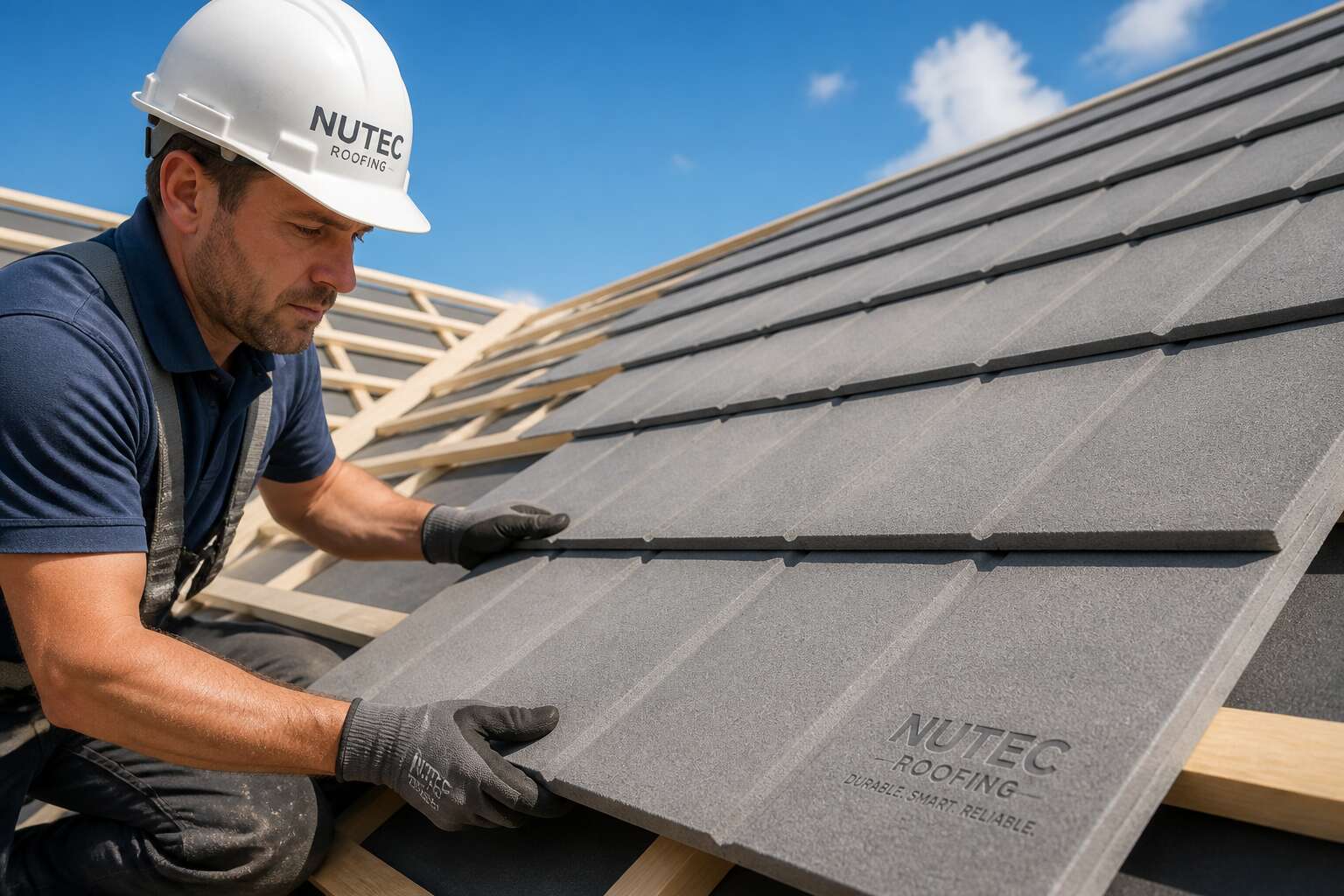
Understanding Nutec Roofing Solutions
What Are Nutec Roof Sheets and Their Core Benefits
Nutec roof sheets builders across South Africa understand a fundamental truth: the roof bears the full force of the elements. Nutec roof sheets, a fibre cement composite, offer a permanence that other materials often fail to deliver. They resist moisture, termites, and the coastal salt air that corrodes lesser metals.
The core benefits are practical. A Nutec sheet is dense, so it does not rattle in a highveld thunderstorm. It also provides thermal mass, keeping interiors cooler in the Lowveld heat. For builders, the material cuts cleanly and installs with standard tools, reducing labour time. I have seen crews finish a Nutec roof in one day!
Here is what separates Nutec from the alternatives:
- It does not rust, ever.
- It withstands hail impact better than most metal sheeting.
- It requires no painting for decades.
This is why nutec roof sheets builders return to it again and again. It is simply dependable.
Common Applications in Residential and Commercial Construction
When you drive through any South African town, look up. The profile of a roof often tells you more about the building’s purpose than any sign on the wall. Nutec roof sheets builders see this daily, working across projects that range from modest family homes to sprawling industrial floors.
In residential work, the material appears in garages, carports, and lean-to additions, where property owners demand something that will outlast the bond. On commercial sites, it handles the wide spans of warehouses and packing sheds without complaint. The sheets are specified for perimeter walls and cladding.
Common applications include:
- Warehouse and factory roofing
- Farm buildings and implement sheds
- Residential carports and veranda covers
- Perimeter fencing and cladding
Crucially, nutec roof sheets builders match the material to the building’s exposure. A coastal warehouse faces salt mist; a Highveld factory faces hail. The sheet handles both, but the fixing schedule differs. I have seen installers use ordinary nails on a coastal roof, and the results were predictable!
Comparing Nutec Roof Sheets with Traditional Roofing Materials
Most people assume a roof is a roof until they compare the sheets side by side. Nutec roof sheets builders often note that traditional corrugated iron clatters in a summer downpour and radiates heat into a home. The fibre-cement composite of Nutec dampens the noise and moderates the internal temperature.
Compare the two on practical points:
- Weight: Nutec sheets stabilise better in high wind but demand a sturdier frame
- Corrosion: steel rusts where scratched; fibre-cement does not
- Thermal response: steel heats and cools fast, while Nutec holds a steadier temperature
The differences compound over time. I have seen steel roofs fail at a single scratched screw hole after a few Highveld storm seasons. Nutec surfaces weather evenly, and the sheet structure remains sound.
Key Durability and Weather Resistance Features
In the space of a single Highveld storm, a roof can face hail, wind, and torrential rain. Nutec roof sheets builders value fibre-cement for its capacity to endure these three forces simultaneously! The sheet’s dense composition absorbs impact without denting, while its low water absorption prevents moisture ingress. Salt spray, common along the KwaZulu-Natal coast, does little to degrade the material.
- Impact resistance from a cellulose and cement matrix
- Dimensional stability under temperature swings
- Resistance to rot, rust, and insect attack
Weather resistance extends to UV exposure. Nutec’s pigment remains stable for decades, unlike painted steel that fades. Builders also note the sheets’ ability to flex slightly under wind pressure without cracking. The material ages evenly, maintaining its structural integrity season after season.
Selecting Skilled Roofing Contractors
Verifying Credentials, Licenses, and Insurance Coverage
A single unverified contractor can turn a premium Nutec roof into a costly repair project. In South Africa, nutec roof sheets builders must comply with strict registration requirements. Selecting skilled roofing contractors means verifying credentials, licenses, and insurance coverage before any agreement. I always advise clients to request documentation upfront, not after the quote is signed.
What does proper verification involve? Ask for these items:
- A valid NHBRC registration certificate.
- Public liability insurance and COIDA letters.
- References from recent Nutec installations.
Qualified builders hand over these papers without hesitation. Missing documents or vague answers indicate problems. Your roof’s future depends on this due diligence.
Requesting and Comparing Detailed Quotations
A detailed quotation separates serious nutec roof sheets builders from those who inflate prices later. When you request quotes, insist on line item breakdowns. Material costs, labour, waste removal, and timeline projections must appear separately. Vague estimates always lead to surprises.
I have watched homeowners accept the lowest price without comparing scope. That mistake costs more than money. A genuine quote covers the full installation sequence, including flashings, fasteners, and waterproofing membranes. It names specific products and quantities rather than generic descriptions.
Here is what to look for when quotations arrive:
– Precise square metre calculations for your roof geometry
– Brand names and grades for every component
– Payment milestones tied to completed work stages
Compare these details across at least three builders. The cheapest proposal might omit critical work. The most expensive may include unnecessary upgrades. Nutec roof sheets builders who provide transparent, itemised quotations demonstrate professional discipline. That discipline predicts the quality of their installation.
Checking References and Past Project Portfolios
A roofing decision is a decades long commitment. The sales pitch matters less than the history of work behind it. Ask any nutec roof sheets builders for a list of completed projects. You want addresses, not just photographs. A glossy image can hide poor fastener placement or uneven flashing details.
Visit the properties when possible. South African weather demands specific installation techniques. A builder who has weathered Cape Town storms and Highveld hail understands regional stress points.
– Confirm the age of each installation
– Look for signs of rust or lifted sheets
– Speak directly with the previous homeowners
The portfolio should show a range of roof geometries. Gable ends, hip roofs, and complex valley junctions each require different skill levels. A builder who only shows simple structures may lack the experience for your specific design. The reference check process separates installers from true craftsmen. Take the time to verify. Your roof will thank you for it.
Red Flags to Avoid When Hiring Roofing Professionals
Roofing contractors can smell indecision from across the street. When you hesitate, the red flags emerge. A builder who demands full payment before any work begins is not being cautious, they are being predatory. Another warning sign is the contractor who claims your current roof is ‘dangerous’ then offers only a mobile number as contact. Reputable nutec roof sheets builders carry insurance and provide warranties without being asked.
Beware of vague timelines. ‘We will start soon’ means nothing. Credible nutec roof sheets builders give you a start date and honour it. If the quote contains line items you cannot decipher, ask for clarity. If they squirm, you have your answer.
– No physical address
– No written contract
– No interest in municipal building plans
Installation Procedures and Best Practices
Pre-Installation Site Assessment and Measurements
Every roof installation begins with a measurement. For nutec roof sheets builders, the pre-installation site assessment demands precision. I always measure twice, then double-check again! The pitch angle, the span between purlins, and the exact ridge length dictate how the sheets will sit. A level laser and a steel tape are non-negotiable tools here. Consider these essential checks:
- Confirm the roof slope aligns with the manufacturer’s minimum recommendation.
- Record the distance from eave to ridge on every face.
- Note any obstructions like vent pipes or skylights.
Only after mapping these numbers can we order the correct sheet lengths. Without diligent measurement, even the finest nutec roof sheets builders will face gaps and misaligned overlaps. That is a costly mistake no one wishes to repeat.
Preparing the Roof Structure for Nutec Sheets
A sound roof begins with a sound frame. Before a single Nutec sheet is lifted, the substructure must be true. Warped purlins or corroded battens undermine everything that follows. I check every timber and steel member, replacing any section that shows rot or rust. Purlin spacing must match the Nutec profile exactly, otherwise screws miss their bearing point entirely.
For nutec roof sheets builders, this stage defines the quality of the finished roof. I use a taut string line to verify the plane of the roof. Any deviation over two metres means resetting the structure. The fixing zone, the narrow flat area on each sheet, needs solid, unyielding substrate beneath it.
- Verify purlin centres against the manufacturer’s span table.
- Replace any twisted or split battens.
- Check that all timber is treated and dry.
Fastener choice also belongs to this stage. The correct screw length penetrates deep into the purlin, not merely the sheet alone. Once the frame is square and stable, nutec roof sheets builders set the sheets with confidence.
Correct Fastening and Sealing Techniques for Watertight Performance
Fastening Nutec sheets is a matter of precision. The screw must enter the fixing zone at a true right angle. A skewed screw distorts the washer and breaks the seal! I always use the manufacturer’s recommended fastener, with a sealed EPDM washer that compresses evenly around the shank.
Sealing begins before the first screw turns. Overlaps need a continuous bead of butyl tape or a compatible sealant. The side lap, the end lap, every junction where water might creep. For nutec roof sheets builders, this is the essence of watertight performance.
- Drive screws into the crown of the profile, not the valley.
- Do not over-torque; the washer should just touch the sheet.
- Stagger end laps across the roof to avoid a continuous seam.
Check each fastener after installation. A loose screw or a pinched washer invites leaks. The roof should shed water as one continuous surface, not a patchwork of compromises.
Managing Overlaps, Flashing, and Ridge Details
Overlaps and flashing determine whether a Nutec roof performs or fails. For nutec roof sheets builders, the side lap must follow the sheet profile precisely, while the end lap should rest fully on the purlin below. Water moves by gravity and capillary action, so the sequence of installation matters more than speed.
Valley flashing requires a minimum upstand and a secure fixing pattern. The ridge detail is the highest point of the roof and the first place wind-driven rain tests the assembly. Set the ridge capping with adequate end overhang and keep the under-ridge seal continuous.
- Align sheet ends to avoid uneven ridgelines
- Lay out each junction before fixing begins
- Plan the overlap sequence to reduce on-site cutting
Each junction is laid out before any screw turns. The builder who plans the overlap sequence reduces waste and keeps the roof plane true, the mark of competent nutec roof sheets builders.
Safety Protocols for Builders and Site Workers
Falls from height remain the leading cause of death on South African construction sites. For nutec roof sheets builders, every installation starts with a risk assessment, not a drill. Walk the site, identify trip hazards, and confirm scaffold ties before any sheet leaves the ground.
Personal protective equipment only works when worn properly. Hard hats, harnesses, and non slip boots are non negotiable. The real protection comes from procedure. Work in pairs, plan each sheet lift, and never carry a Nutec sheet alone in wind. A sudden gust can catch the sheet and pull you off balance.
- Secure all edge protection before roof access
- Keep tools tethered to prevent dropped object injuries
- Mark every steel purlin before walking the roof plane
Cutting Nutec sheets produces silica dust, so use wet cutting or dust extraction. When the workday ends, leave the roof in a safe state. That discipline separates professional nutec roof sheets builders from the rest.
Common Installation Mistakes and How to Prevent Them
Nutec roof sheets builders learn to respect the first row. If the starter sheet is out of square, the whole roof follows suit. I always run a chalk line across the purlins and check the diagonal measurements before driving a single screw. Proper alignment prevents puckers at the overlaps, which cause leaks later.
- Driving screws at an angle, which tears the sheet’s core
- Using oversize holes for thermal movement, which lets water seep in
- Leaving cut edges raw and exposed to the weather
Thermal expansion is a constant force. Nutec sheets move with temperature swings, so fasteners need a little play. Over tightening restricts that movement and buckles the panel. Leave the sheets to acclimatise on site for a day before fixing. Professional nutec roof sheets builders also check the weather forecast and postpone installation when high winds are predicted, because a loose sheet can be lifted off the roof.
Cost Considerations and Budgeting
Factors Influencing Overall Roofing Project Costs
The final price tag on any roofing project rarely matches a simple square meter calculation. I have watched budgets break down from factors nobody anticipates. For nutec roof sheets builders, the real cost drivers emerge during site inspection, from accessibility constraints to the existing structure’s condition. Transport logistics play a significant role in South Africa, especially for remote properties or steep slopes where delivery vehicles cannot maneuver.
Waste allowance typically adds five to eight percent to material quantities. Additional factors include:
- The complexity of the roof geometry, including valleys and parapets
- The condition of the existing substructure requiring reinforcement
- Labour rates varying by province and skill level
The budget must also account for scaffolding hire and safety compliance equipment, a line item nutec roof sheets builders know can grow quickly. These elements amount to fifteen percent of total expenditure, a figure many property owners overlook.
Material Pricing for Nutec Roof Sheets and Accessories
A material’s price tag rarely tells the full story. Nutec roof sheets builders quote on materials sheet by sheet, and those prices shift with profile, thickness, and length. A standard corrugated sheet remains the economical baseline, while wider or thicker formats command a premium per unit. Accessories drive costs in unexpected ways. Ridge capping, barge boards, flashings, and fasteners each carry their own price, and a box of self-tapping screws with EPDM washers looks cheap in isolation, yet a full roof consumes several boxes across overlaps and perimeters.
Volume changes the maths. In my experience, South African suppliers offer better per-unit rates when nutec roof sheets builders order the entire roof schedule at once, eliminating top-ups. Quotation validity matters; input costs shift, and a quote older than thirty days may no longer hold. Budget buffers for accessories are standard practice, especially colour-matched flashings, which carry a premium over standard grey.
Labor Costs and Contractor Fee Structures
Labor costs often separate a realistic budget from a fantasy. Nutec roof sheets builders typically charge either per square metre or per day, and the difference matters when your roof has complex valleys or steep pitches. A per-square-metre rate rewards speed, while a daily rate rewards meticulousness. Neither is wrong, but you should know which one you are signing.
Contractor fee structures also include hidden line items. Scaffolding hire, debris removal, and travel time to remote sites can appear on the final invoice without prior warning. Nutec roof sheets builders do not always volunteer these costs, which becomes clear only at invoicing. In my experience, the cheapest quote rarely stays the cheapest once the extras arrive!
Common fee structures I have encountered:
- Flat rate per square metre, inclusive of labour only
- Daily rate with a minimum number of days
- Cost-plus, where materials and labour are billed with a percentage margin
Hidden Expenses and Contingency Planning
The difference between a finished roof and one that stalls often comes down to the contingency fund. Most homeowners allocate 10%, but roof work in South Africa reveals surprises once old covering is removed. Rotting purlins and corroded fasteners add days to a project. Nutec roof sheets builders face these realities daily.
When budgeting, separate fixed costs from variable ones. Fixed costs include materials and agreed labour. Variable costs include anything discovered during installation. A 15% contingency is safer than the traditional 10%. A Durban client learned this when asbestos removal ballooned their budget by a third.
Hidden expenses to track:
- Sheet transport to rural sites
- Waste disposal for old roofing
- Temporary weather protection during delays
Planning for these items means fewer surprises on the final invoice. Nutec roof sheets builders who break costs down line by line give the clearest picture. If a quote omits line items, ask why!
Financing Options and Cost-Saving Strategies
Financing a roof replacement rarely follows a single route. Some homeowners draw from building loans offered by major banks, while others negotiate staged payments directly with nutec roof sheets builders. Matching the payment schedule to project milestones protects both sides.
Cost-saving strategies live in the procurement details. Standard sheet lengths reduce offcut waste. Ordering accessories in bulk with a neighbour often unlocks discounts. Buying during off-peak months can also yield friendlier labour rates. Experienced nutec roof sheets builders will tell you that timing alone can shift a project’s cost by thousands!
The financing landscape includes:
- Building loans with variable interest tied to prime
- Supplier credit with interest-free periods
- Personal loans for smaller installations
I have seen homeowners save close to 12 percent by comparing financing terms before signing anything. That diligence matters more than the quote’s first number.
Maintenance and Longevity
Routine Inspection Checklists for Nutec Roof Sheets
Few things age as gracefully as a properly maintained Nutec roof, which is saying a lot, considering the material itself is essentially high-density cement fibre. But even the most stoic building material appreciates a little attention. The secret to a decades-long lifespan isn’t hidden in the factory, it lives on your roof. A routine inspection checklist for Nutec roof sheets builders should be as standard as checking your car’s oil, and for good reason.
Start with a visual sweep from the ground using a decent pair of binoculars. Look for any obvious discolouration, moss build-up, or debris accumulation in the valleys. These are early warning signs that moisture is lingering longer than it should. Then, on a dry, windless morning, get up on the ladder. You are checking for fastener integrity, sheet alignment, and any hairline cracks near the screw heads. Ignore these micro fractures and you invite leaks that will quietly ruin the underlying timber structure.
Beyond the sheets themselves, the flashing and ridge capping deserve your undivided attention. These are the primary battlegrounds against water ingress. Reseal any gaps with a quality polyurethane sealant, and replace any corroded washers without hesitation.
Do not wait for a storm to reveal the weak points. A proactive routine every six months is all it takes to avoid a catastrophic replacement. Here is what to look for:
– Loose or popped screws that need re-seating
– Organic growth, specifically moss or lichen, in shaded areas
– Sagging or warped sheets that suggest poor support
– Deteriorating rubber washers or gaskets
– Blocked gutters that cause water to back up under the edge
Remember, the lifespan of your roof is directly tied to the diligence of your inspections. Finding a small issue early costs you a tube of sealant. Finding it late costs you a new rafter system. The choice is quite straightforward.
Cleaning Methods That Preserve Surface Integrity
When cleaning Nutec roof sheets, builders often discover that the gentlest approach works best. A pressure washer set to full fury will strip the surface layer and leave the board porous and rough. The result is a damaged roof that absorbs water far too easily.
A soft brush and a mild detergent solution work far better. Nutec roof sheets builders who choose this method will notice the surface keeps its factory finish. Work from the top down, letting the suds carry away the dirt. Rinse with a low-pressure hose. For stubborn organic growth, a diluted bleach solution kills algae and lichen without gouging the finish.
Nutec roof sheets builders should also consider the hardware. Galvanised fasteners corrode faster when exposed to harsh chemicals, so rinse every trace of cleaning agent away. Metal scrapers invite moisture intrusion, so leave them in the toolbox.
Repairing Minor Damages and Replacing Faulty Sheets
Every storm tests a roof in silence. By the time water appears inside the house, the failure has been growing for months. For nutec roof sheets builders, the real skill lies in catching these failures early, and knowing when to let go.
Minor damages are manageable. A small crack, a loose fastener, or a dented corner can often be sealed with quality roof sealant and a replacement screw. Work on a dry surface and inspect the underside for hidden corrosion.
Replacing a faulty sheet is a different decision. Nutec roof sheets builders look for three indicators:
- Crazing, where fine cracks form a web across the sheet.
- Edge delamination, where the material separates in layers.
- A dull, hollow sound when tapped, which suggests internal breakdown.
Patching is no longer an option. The board has lost its integrity, and no sealant will bring it back! As a builder, I have learned to trust the evidence of my eyes and hands, not the hope that a leak will go away.
Extending the Service Life of Your Roofing System
A roof rewards patience. Nutec roof sheets builders understand that longevity is not an accident of materials, it is a sequence of deliberate choices made years before the first leak appears. Maintenance is the quiet work that prevents the loud failures.
The service life of a nutec roofing system depends on three variables: how well the structure breathes, how cleanly it sheds water, and how gracefully it absorbs the thermal stress of the South African sun. A builder who reads these signals will intervene early. One who ignores them will be back for a full replacement.
For nutec roof sheets builders, maintenance is not a separate service. It is the continuation of the original installation, carried forward through every season. The roof does not fail all at once. It fails in small increments, and those increments are where the builder’s eye matters most.
When to Consult a Builder for Roof Restoration
Roofs fail quietly long before they fail visibly. By the time water stains appear on a ceiling, nutec roof sheets builders who originally installed the system could have corrected the issue for a fraction of the cost. Restoration is not about waiting for damage. It is about reading the small signs.
Nutec roof sheets builders look for three specific warnings:
- Fastener corrosion near the washers
- Hairline cracks along the fastener lines
- A chalky residue on the surface after heavy rain
These indicate the protective coating is degrading. The sheets are not failing yet. They are signalling that restoration is due. I have seen roofs that should have lasted decades fail in ten years because nobody called when the first warning appeared. The difference between an afternoon of targeted repair and a full reclad is often just the timing of that first call.



0 Comments