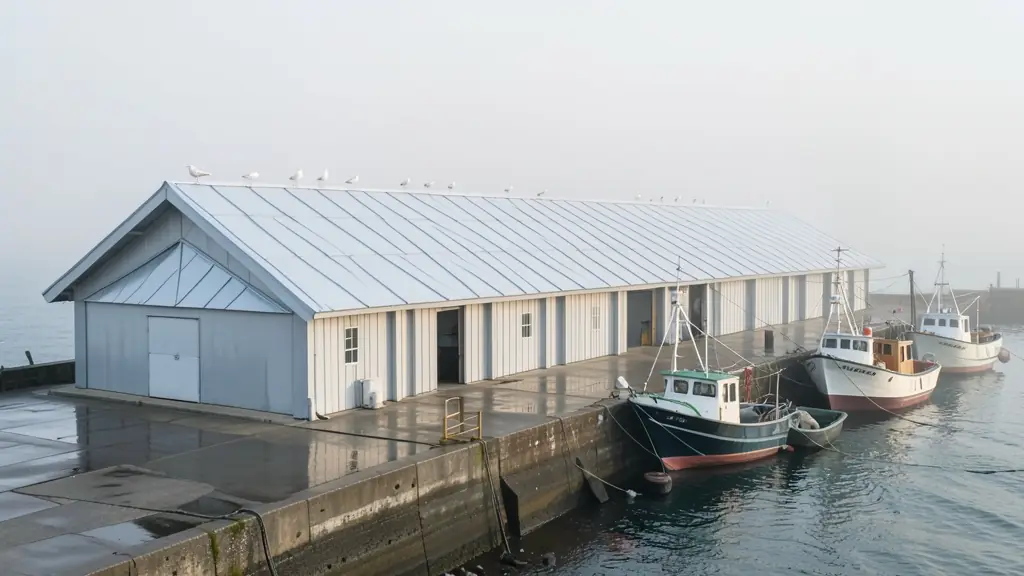
Aluminium roof sheets are rolled in the same IBR and corrugated shapes as steel, but there is no steel inside to rust red. That is why they turn up on fish factories in Saldanha, holiday houses on the dune in Ballito, sugar mill buildings on the KZN north coast and plant rooms near acid fumes in Richards Bay. They cost more a metre than coated steel and they behave differently on the roof, so the choice is worth making for the right building, not by default.
Where aluminium earns its price
Within a few hundred metres of breaking surf, salt spray strips the coating off steel sheets from the edges and laps inward. Aluminium forms its own thin oxide skin that heals itself, so it goes dull grey and stays sound. The same applies over fishmeal plants, tanneries, swimming pool halls and fertiliser stores where the air is wet and aggressive. Inland on a Highveld house, a good aluminium zinc coated steel or pre-painted sheet usually does the job for less.
Thicker, softer and on the move
- Thickness: aluminium is weaker than steel for the same gauge, so roofs often use 0.7 to 0.9 mm sheets where steel would be 0.5 mm. The data sheet gives the purlin spacing for each, and it is often closer.
- Dents: hail and boots mark it more easily. Walk only on the purlin lines, on boards.
- Heat movement: it grows and shrinks about twice as much as steel. On long runs the fixing holes are oversized or the clips allow slide, or the screws work loose.
- Weight: about a third of steel, helpful on old timber trusses; check with the weight calculator.
Keep it away from steel and copper
Aluminium touching bare steel, copper or lead in the wet eats itself away at the contact (galvanic corrosion). Run off from a copper geyser pipe or an old galvanised gutter does the same. Put a plastic or bitumen strip between the sheets and steel purlins, use stainless steel or aluminium screws with sealing washers, and order aluminium flashings and ridge capping to match. One plated steel screw can leave a ring of white powder and a hole within a few years at the coast.
What to ask the supplier
Ask the alloy and temper, the thickness, whether the sheet is mill finish or painted, the purlin spacing from the data sheet, and the fasteners they recommend. Get the flashings in the same metal on the same quote. If you are comparing it with steel, put both on the cost estimator with their own thickness.
What to put in your request
- Say how far the building is from the sea
- Mention fumes, salt or chemicals on site
- Give the purlin type: steel or timber
- Ask for matching aluminium flashings
- Ask which fasteners and isolation they supply
Aluminium Roof Sheets: who asks for them and why
- Homeowners and DIY builders: a beach house or a holiday flat on the dune where steel sheets rust through
- Roofers and roofing contractors: coastal reroofs where the fasteners, flashings and isolation must all match the aluminium
- Builders, developers and quantity surveyors: seafront houses and complexes specified with aluminium roofing to resist salt spray
- Factories, warehouses and steel buildings: fishmeal plants, chemical stores and pool halls where the air attacks coated steel
- Shops, offices and business premises: harbour shops, restaurants and filling stations a short walk from the sea
- Farms: sheds, barns and animal houses: packsheds and fertiliser stores where damp and chemicals rot steel sheets early
- Schools, churches, clinics and halls: coastal schools, clinics and lifeguard buildings exposed to salt spray all year
- Landlords, body corporates and estate managers: seaside complexes replacing rusted steel roofs block by block with aluminium sheets