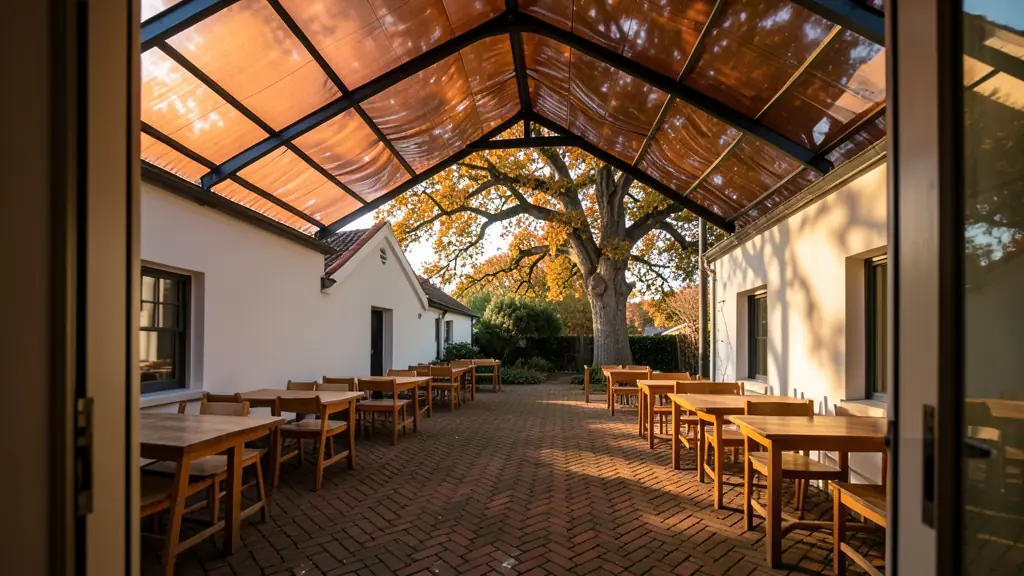
Polycarbonate roof sheets are tough plastic sheets that let light through and stop rain. They come as solid sheets shaped like steel IBR or corrugated, and as multiwall (twin wall) panels with hollow flutes that insulate a little better. You see them over patios in Benoni, carports in Bloemfontein, pergolas in Umhlanga and restaurant courtyards in Stellenbosch. They are much stronger than PVC, but they need the right side up, closer purlins and fixings that let them move.
Solid profiles or twin wall
- Solid IBR and corrugated sheets match a steel roof, so they lap straight in as daylight panels or make a whole patio roof. Often sold in set lengths per sheet.
- Twin wall and multiwall panels are flat, stiffer and a little cooler, used on conservatories and flat patio frames with aluminium joining bars and end caps to keep dust and insects out of the flutes.
For daylight sheets in a workshop roof, see clear roof sheets; for the cheaper plastic option, plastic roof sheets.
Tint, heat and the UV side
Clear sheets over a north facing patio on the Highveld make a hothouse by eleven in the morning. Bronze, grey and opal cut the glare and heat a good deal; opal gives the softest light. One face carries a UV protective layer, marked on the film. That side faces the sky. Fitted upside down, the sheet yellows and goes brittle within a few summers, and no supplier will honour a guarantee on it. Peel the film just before fixing, not weeks later in the sun.
Purlins, drilling and washers
Polycarbonate spans less than steel, so the purlins sit closer together; the maker's data sheet gives the spacing for each profile and thickness, and the purlin spacing calculator helps you plan. The sheet grows and shrinks a lot with heat, so drill holes a few mm larger than the screw, fix through the crest, and use the soft sealing washers sold for plastic sheets. Do not overtighten: a crushed washer cracks the sheet around the hole.
Hail, cleaning and care
Good polycarbonate takes most Highveld hail that would shatter glass, though very large stones can still crack it. Clean with water and mild soap and a soft cloth; solvents, thinners and pressure washers damage the surface. Never stand on the sheets: put boards across the purlins. Sweep leaves off so they do not stain or hold water against the laps, and check the screws after the first hot summer, when movement can loosen one or two. A gutter along the low edge keeps run off from splashing the paving below.
What to put in your request
- Give the patio or carport size and the pitch
- Say clear, bronze, grey or opal
- Say solid profile or twin wall panels
- Say whether a frame exists or is needed
- Ask for washers, screws and flashings too
Polycarbonate Roof Sheets: who asks for them and why
- Homeowners and DIY builders: a patio, carport or pergola roof that keeps rain off and lets the light in
- Roofers and roofing contractors: patio covers and daylight panels fixed with oversized holes and soft washers
- Builders, developers and quantity surveyors: covered walkways, braai areas and courtyards on new houses and complexes
- Factories, warehouses and steel buildings: covered loading areas and walkways that need light without electric lighting all day
- Shops, offices and business premises: restaurant courtyards, nursery shade and filling station walkways under tinted sheets
- Farms: sheds, barns and animal houses: seedling tunnels, packshed light panels and covered wash bays
- Schools, churches, clinics and halls: school walkways, clinic waiting shelters and bus stops under tough clear sheets
- Landlords, body corporates and estate managers: matching patio covers across a complex, with one approved tint and frame colour
Frequently asked questions
Is polycarbonate better than PVC for a patio?
Can I mix IBR polycarbonate with steel IBR?
How are polycarbonate sheets priced?
Who will quote me?
Work it out first
- Roof sheet calculatorEave length, slope and profile in, sheets, cut lengths and running metres out
- Roof pitch and area calculatorFootprint and pitch, or rise and run, in: slope length, sloped area and pitch out
- Purlin spacing calculatorProfile, thickness and roof or wall in: the typical span to check and purlins per slope