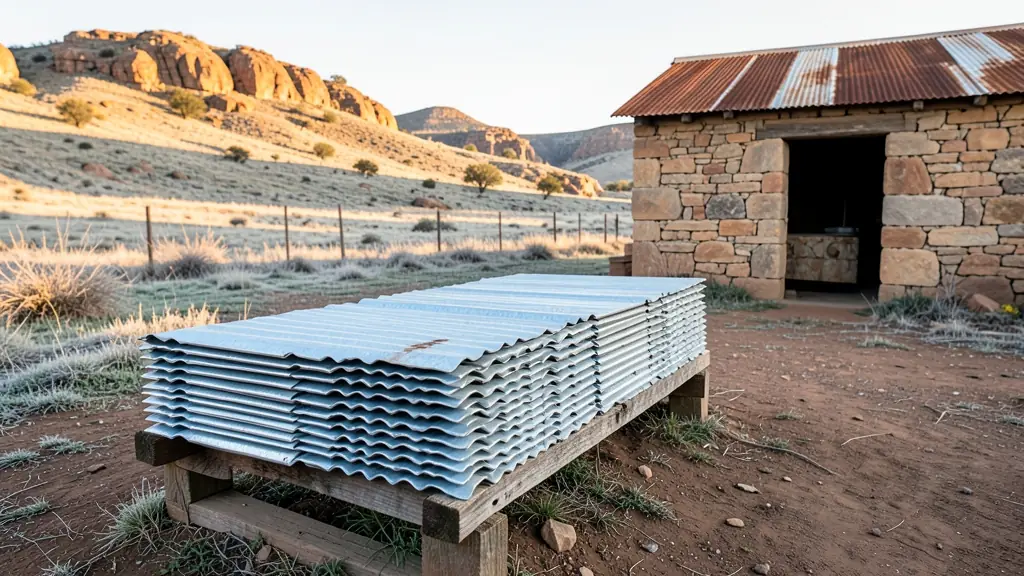
A corrugated iron roof sheet is the old rounded wave: steel rolled into soft, even corrugations, still called "corrugated iron" though it has been coated steel for generations. It belongs on Karoo farmhouses, Free State sheds, verandas in Pietermaritzburg and anywhere a building should look its age. It also bends: a factory can curve or crimp it for a barrel roof or a bullnose veranda that IBR cannot follow. The trade off is a shallower profile, so it needs a steeper pitch and closer purlins.
Where corrugated still makes sense
- Farm buildings: implement sheds, stables, dairies and grain stores.
- Older and heritage houses, where a body corporate or a heritage body expects the original look.
- Curved roofs and verandas, using sheets curved at the factory.
- Walls and fencing, where the wave hides dents better than a flat pan.
Cover, laps and pitch
Standard corrugated covers about 762 mm per sheet once the side lap is taken off. That lap is one and a half corrugations, laid away from the prevailing wind so rain is not driven under it. Where a slope needs two sheets, the upper one laps the lower by about 150 to 200 mm. Because the corrugations are shallow, water spreads wider across the sheet in a storm, so the data sheet asks for a steeper pitch than IBR. Below it, the laps leak. Check your slope on the pitch and area calculator. If an old veranda is flatter than the new sheet allows, IBR or a concealed fix sheet may be the only honest answer.
Why old corrugated rusts at the laps and purlins
A farmer near Bethlehem re-sheeting a 30 m shed will usually find the sheets sound in the middle and rusted through along every purlin and lap. Water sits there, dust holds it, and nails or old screws break the coating. Galvanised sheets on an animal shed suffer worst, because manure fumes eat the zinc. On a new roof ask for an aluminium zinc or painted coating, screws with washers instead of nails, and a lap sealed against the weather side. Compare the options on galvanised roof sheets.
Corrugated or IBR?
IBR spans further, runs to lower pitches and drains heavy rain faster. Corrugated is softer looking, bends and suits old buildings. On a plain modern house, most roofers will point you to IBR; on a farmhouse with a curved veranda, corrugated wins. Mixing the two on one building is common: IBR on the main roof, corrugated on the stoep, with a flashing where they meet.
What to put in your request
- Give the eave length and the slope length
- Say whether any sheets must be curved
- Name the coating: galvanised, AZ or painted
- Mention animals, fumes or the coast nearby
- Say if the old sheets must come off first
Corrugated Roof Sheets: who asks for them and why
- Homeowners and DIY builders: a farmhouse, a heritage cottage or a curved veranda that needs the traditional wave
- Roofers and roofing contractors: re-sheeting old corrugated roofs and replacing rusted laps without changing the look
- Builders, developers and quantity surveyors: restorations and new houses designed with a curved or bullnose veranda roof
- Factories, warehouses and steel buildings: wall cladding on older workshops and stores where the wave matches the existing walls
- Shops, offices and business premises: country restaurants, farm stalls and guest houses that want the old roof look
- Farms: sheds, barns and animal houses: sheds, stables, dairies and grain stores re-sheeted along rusted purlin lines
- Schools, churches, clinics and halls: old station buildings, churches and halls where the original profile must stay
- Landlords, body corporates and estate managers: a heritage estate or village where the rules ask for corrugated on every roof