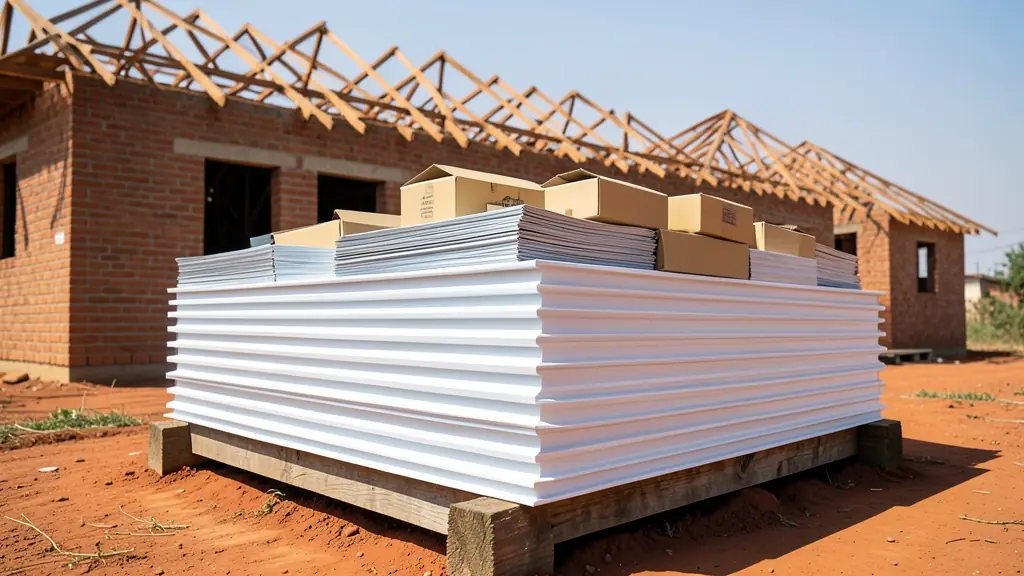
Roof sheets prices are quoted per running metre or per sheet cut to length, and two quotes for "IBR, 6 m" can sit far apart for honest reasons. The profile, the thickness, the coating and colour and the number of metres set the price of the sheet; flashings, screws, delivery and labour set the rest. Here is what moves each line, so you can read a quote properly, compare like with like and spot the low price that comes with a thinner sheet.
What moves the price of the sheet itself
- Profile. Corrugated and IBR usually cost less a metre than concealed fix or tile effect; insulated panels are priced per m².
- Thickness. A 0.53 mm sheet costs more a metre than a 0.47 mm one in the same profile.
- Coating and colour. Plain galvanised, aluminium zinc and pre-painted each step up; see Chromadek roof sheets.
- Quantity. A full roof often gets a better rate than a handful of sheets.
- The steel price. Coil prices move, so a quote holds only for the days printed on it.
Why a 6 m sheet has no single price
People search for 6 m roofing sheet prices, but a sheet price is the metre rate times the length, and the cover differs by profile. A 6 m IBR sheet covers about 686 mm across the roof; a 6 m corrugated sheet about 762 mm. A builder in Polokwane comparing the two for six RDP extensions should compare the cost per m² of roof covered, not per sheet. Also check the length is the length the roof needs: a slope of 5.4 m with a 300 mm overhang wants sheets cut to fit, not a stock 6 m with the extra hanging past the gutter.
The lines a sheet price leaves out
Ridge capping, barges and aprons, screws and fillers; delivery, which outside a metro is often extra; a crane or a long flatbed for long sheets on a double storey; stripping and carting the old roof; replacing rotten battens or a sagging truss found once the sheets are off; gutters; labour, which roofers quote per m² fitted or for the job; and VAT, which some quotes include and some do not. The roof sheeting cost estimator builds a rough budget from all of these.
Comparing quotes, and the cheapest metre
Line the quotes up in columns: profile, thickness, coating class, colour, lengths, flashings, screws, delivery, labour, VAT. A gap usually shows up at once. A metre rate far below the rest nearly always means a thinner sheet, often 0.3 mm or under, or a lighter coating. Those sheets dent in the first Highveld hailstorm and rust early. Ask for the thickness and coating class in writing, on the quote and the delivery docket; roof sheet thickness shows how to check them.
What to put in your request
- Give the profile, thickness and colour you want
- List the sheet lengths or the roof measurements
- Say if the old roof must be stripped and carted
- Give the town and whether a flatbed can reach
- Ask for VAT and delivery shown as separate lines
Roof Sheeting Prices: who asks for them and why
- Homeowners and DIY builders: a budget for a double garage roof that matches the house before the builder starts
- Roofers and roofing contractors: supplier prices compared per metre with the same thickness and coating on each one
- Builders, developers and quantity surveyors: a priced cut list for several units so the roof cost is known before the tender
- Factories, warehouses and steel buildings: a warehouse reroof priced with cranage, stripping and the steel price on the day
- Shops, offices and business premises: a quote for a shop or restaurant roof with every line item and VAT shown clearly
- Farms: sheds, barns and animal houses: the cost of re-sheeting a long implement shed with galvanised or coated corrugated
- Schools, churches, clinics and halls: three comparable quotes for a school or clinic roof as procurement rules expect
- Landlords, body corporates and estate managers: a reroof budget per unit for trustees to approve at the body corporate meeting